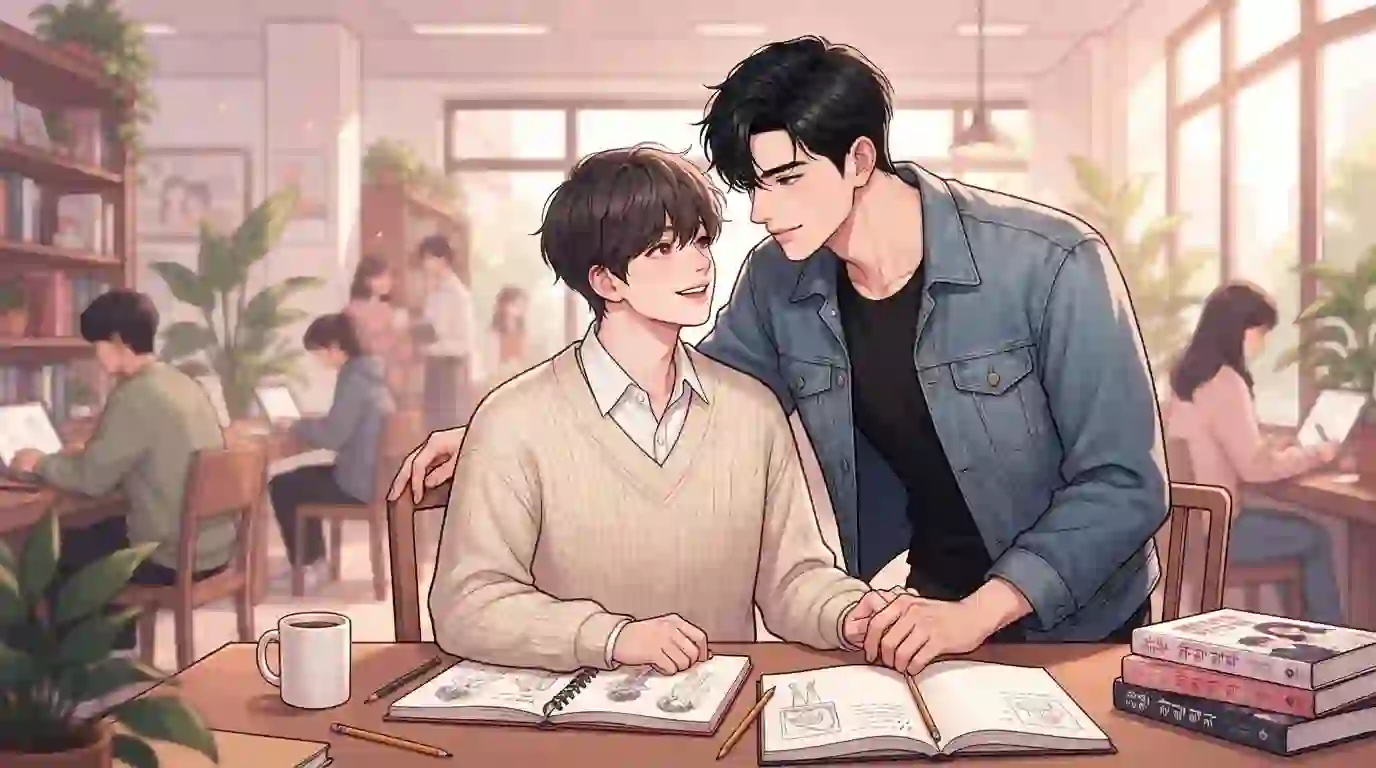
Finding a BL manhwa that fits your taste can feel harder than it should. Search results may mix official chapters, reposts, mature editions, and vague tags, leaving readers to waste time or open a story that does not suit them. This guide gives you a clear path: understand the labels, choose a good fit, and read in a way that supports creators.
What is BL manhwa?
Short answer: BL manhwa is Korean comics that center romantic, emotional, or relationship-focused stories between male characters. The label names a broad publishing category, not one plot, tone, or age rating.
It can appear as a full-color scrolling webtoon, a digital comic with page-like panels, or a printed volume. A title may be gentle and funny, tense and dramatic, or written for adults, so readers should always check the listing for that specific work.
At its best, the label helps readers find an emotional focus. It does not erase the fact that creators bring different voices, cultures, relationship styles, and genres to their work.
Why BL manhwa needs context, not assumptions
It is tempting to treat BL manhwa as one fixed formula, but that shortcut hides the range of stories under the label. One series may build a quiet friendship, while another places romance inside fantasy politics, campus comedy, mystery, workplace tension, or historical drama.
Ask, “What kind of story does this title tell?” rather than “Is this like every other title?” That question leads to better choices and better recommendations.
BL is also a publishing and fandom term that can carry different meanings across regions and communities. Use a creator’s or publisher’s description as your strongest guide, especially when labels such as yaoi, mature, omegaverse, or LGBTQ+ appear beside it.
Manhwa, manga, webtoon, and manhua: what changes?
Manhwa commonly refers to comics from Korea, manga refers to comics from Japan, and manhua commonly refers to Chinese-language comics. These words describe origin and publishing traditions; they do not set a story’s sexuality, quality, or audience.
A webtoon is a digital reading format and platform ecosystem, often built for vertical scrolling on a phone. A story in this category may use that format, but webtoons cover every genre, and relationship-focused comics also exist outside the scroll format.
Translation, release schedules, pricing, and edited editions can differ by service and country. Treat the official title page as the source of truth for the version available to you.
How vertical scrolling changes the BL manhwa reading experience
A phone-first episode controls rhythm differently from a printed page. Long gaps can create a pause, a single descending panel can set up a surprise, and color can change the mood before a character speaks.
In these comics, creators often use that space to let expressions, silence, and small gestures land. The format does not make a story shallow or predictable; look for scenes where dialogue, composition, and pacing work together.
Try reading a sample episode without rushing. Notice whether the panels guide your eye smoothly and whether the ending creates curiosity without feeling like an empty cliffhanger.
The story patterns you may encounter
Start with the feeling you want, then use tropes as filters instead of promises. A trope names a familiar setup, but it does not tell you whether the characters act with care or whether the story will suit you.
- Slow burn: Feelings develop gradually through shared moments, trust, and setbacks.
- Friends to lovers: Existing closeness changes as characters recognize new feelings.
- Campus or workplace romance: Daily routines, teamwork, rivalry, or social pressure shape the relationship.
- Fantasy or historical romance: World-building, magic, politics, or period settings sit beside the emotional story.
- Mystery or suspense: Secrets, investigations, and danger raise the stakes around the central relationship.
- Healing and found family: Supportive friendships and recovery matter as much as the romance.
Many titles blend several of these patterns. Read the synopsis, a few official sample episodes, and content notes before you invest in a long series.
Use this detailed table to choose a satisfying story
Use this BL manhwa reading map before starting a new series. It turns vague browsing into a simple choice based on mood, time, and personal boundaries.
| If you want… | Look for tags or story signals | What often feels satisfying | Check before reading |
|---|---|---|---|
| A gentle escape | Slice of life, healing, cozy, slow burn | Small acts of care, calm pacing, and everyday warmth | Whether it is ongoing or completed |
| A laugh-first read | Comedy, roommates, campus, awkward crush | Fast dialogue, playful misunderstandings, and expressive art | Whether humor relies on themes you dislike |
| High stakes | Fantasy, historical, supernatural, political drama | A romance shaped by a larger world or difficult choices | How much plot appears outside the relationship |
| Adult character settings | Workplace, professionals, mature, 18+ | Career pressure, adult friendships, and different life goals | The stated rating and content notes |
| A strong plot puzzle | Mystery, thriller, secret identity, revenge | Clues, tension, and a relationship affected by revelations | Violence, distress, and pacing tags |
| A quick win | Completed, short series, anthology | A defined ending and a manageable time commitment | Total chapter count and edition availability |
| A new experience | A genre you rarely choose | Fresh settings, new art styles, and unexpected emotional beats | A free preview and the official synopsis |
The table is a starting tool, not a scorecard. A story can surprise you in a good way, but a clear first choice saves time and makes browsing more enjoyable.
How to choose a title that matches your comfort level
Good recommendations begin with a few honest choices. Decide whether you want school, adult workplace, fantasy, historical, or everyday settings; then decide whether you prefer a completed story or weekly updates.
Next, set boundaries. If coercion, violence, emotional distress, explicit material, or a power imbalance would make a story less enjoyable for you, look for content notes and reader-facing ratings before the first chapter. Tags do not replace judgment, but they help you make an informed choice.
A strong BL manhwa recommendation names both the appeal and the caution. “Warm slow burn with a tense family plot” gives a reader far more help than “You have to read this.”
Use this five-step selection check:
- Read the official synopsis instead of a cropped social post.
- Try the available sample episodes to test art, dialogue, and pacing.
- Confirm whether the series is completed, on hiatus, or ongoing.
- Read the stated rating and content information.
- Check that the publisher, language, and region match the edition you want.
Where to read legally and why it matters
Read BL manhwa through licensed publishers, creator-approved stores, or official apps whenever they serve your region. Services such as WEBTOON, Lezhin Comics, Tappytoon, Manta, Tapas, and Ridi use different catalogs, prices, languages, and regional rights.
A title appearing on one service does not prove it is licensed everywhere. Check the exact listing rather than trusting a screenshot, a repost, or a search result with no publisher information.
Legal access supports the creator’s work and the people who prepare it for readers, including translators, editors, colorists, and publishers. It also gives you a more reliable reading experience, with correct chapter order, readable text, content labels, and a way to contact support.
Use this quick legitimacy check before you read:
- Look for the creator’s name and a copyright notice.
- Confirm that the site or app identifies the publisher.
- Check whether the title page lists chapters, pricing, and ratings clearly.
- Use official search, storefront, or publisher pages rather than copied image hosts.
- Report suspicious reposts to the rights holder or platform when a reporting option exists.
Avoid scans, reposts, and sites that remove creator credits. Free samples and time-limited unlocks on official services offer a better entry point than material that ignores the people who made it.
Ratings, editions, and age gates: read the label, not the rumor
Not every BL manhwa has the same age suitability, and one series may have edited, mature, or region-specific editions. Do not assume a pastel cover, a popular ship, or a short social clip tells you the rating.
Open the official title page and check its stated audience, content notes, language, and availability. Respect age gates and local rules; they help readers choose appropriate material and keep platforms accountable to their published standards.
A mature tag is information, not a challenge or a recommendation. If a label is unclear, choose a different title or contact the official service for clarification.
How to judge art, translation, and pacing
Strong art supports the story rather than only decorating it. Notice whether expressions stay clear during conversation, whether backgrounds establish place, and whether panel flow makes a scene easy to follow.
Translation deserves the same care. A clear localized script preserves intent, tone, and character differences without making every person sound alike; official English editions can also release on a different calendar or use a different chapter count from the original Korean run.
To judge pacing, read enough to see the central conflict, not only a teaser. A BL manhwa earns your trust when emotional turns grow from character choices, even when the plot uses a familiar trope.
Read relationships with care and curiosity
Romance fiction can explore messy choices, wish fulfillment, conflict, and growth. A story does not automatically endorse every action it portrays, yet you can still decide that a theme or dynamic is not for you.
Keep two ideas together: enjoy fiction freely and stay honest about your boundaries. Discussing consent, representation, stereotypes, and cultural context with care leads to more useful conversations than attacking readers or creators.
Use specific words when you review a title. “The reveal felt rushed,” “the dialogue made the reconciliation believable,” and “the content note helped me opt out” give the next reader something they can use.
Common myths that make recommendations worse
Myth: Every title has the same tone. Reality: Romance, comedy, fantasy, drama, and thriller elements can all sit under the same broad label. A precise recommendation names the tone instead of relying on a category alone.
Myth: A popular title will fit everyone. Reality: Popularity cannot decide your preferences, boundaries, language needs, or tolerance for waiting between episodes. A smaller series may be a much better match.
Myth: A free upload must be authorized. Reality: A price tag tells you little. Check the publisher, creator credit, and official title page before you start.
Myth: Tags tell the whole story. Reality: Tags make browsing faster, but a synopsis, preview, and content information give you a fuller picture.
Build a personal reading map, not a giant unread list
Start small. Choose one completed series for a reliable ending, one ongoing series for a weekly ritual, and one unfamiliar subgenre to test a new mood.
Keep a simple note with the title, official platform, tags, rating, chapter status, and your reaction after three episodes. This takes less than a minute and stops you from chasing recommendations that do not match what you actually enjoy.
If you recommend a BL manhwa to a friend, ask one question first: “Do you want comfort, comedy, drama, or high stakes?” The answer creates a better match than a long list of titles.
A clear reason makes your recommendation feel personal and trustworthy. It also helps your friend tell you what to suggest next time.
Frequently asked questions
Is it a genre or a format?
Short answer: It is a broad category of relationship-centered comics, while “manhwa” identifies Korean comics and publishing traditions. Individual works may use romance, comedy, fantasy, drama, mystery, or other genres.
Where can I read BL manhwa legally?
Short answer: Read BL manhwa through an official app, publisher site, or creator-approved store that lists the title, creator, and rights information for your region. Check country availability, price, rating, and language before you make a purchase.
Is every title appropriate for teens?
Short answer: No. Age suitability varies by title, edition, platform, and region. Read the official rating and content notes, then respect the service’s age gate.
How is it different from BL manga?
Short answer: The main difference is the comic’s origin and publishing tradition. BL manga comes from Japan, while manhwa comes from Korea; both can contain many different formats, tones, and ratings.
What do “ongoing” and “completed” mean?
Short answer: An ongoing title is still receiving chapters or has not announced its final release, while a completed title has a published ending. Check the official listing because translated releases can lag behind the original edition.
How do I recommend a title responsibly?
Short answer: Name the mood, setting, status, and any major content considerations without spoiling key moments. A useful recommendation helps another reader choose freely rather than pressuring them to copy your taste.
Choose your next story with intention
A great BL manhwa does more than create a moment of romance. It gives its characters room to feel real, invites you into its world, and respects the time you give it.
Pick a mood from the table, check the official listing, read a sample chapter, and save one thoughtful note about what worked. Before you leave, remember: a specific, spoiler-light recommendation can help another reader find a story they will truly enjoy while supporting the people who create it.