
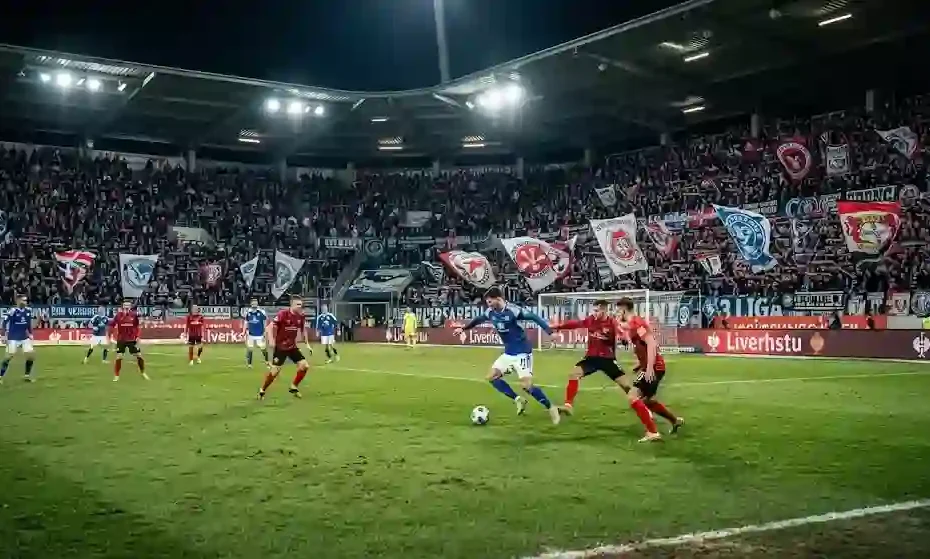
Tracking lower-league German football standings often leads to broken data, confusing promotion scenarios, and delayed score updates. Missing a sudden shift in rankings means you miscalculate crucial promotion battles and dangerous relegation fights. This ultimate reference breaks down the official 3. Liga Tabelle, tie-breaking criteria, and league mechanics using reliable governing data.
What Is the 3. Liga Tabelle and How Does It Work?
The 3. Liga represents the third tier of professional football in Germany, operating directly under the 2. Bundesliga. Twenty professional clubs compete each season, playing a complete home-and-away schedule across 38 matchdays. The official 3. Liga Tabelle tracks wins, draws, losses, goals scored, goals conceded, and total accumulated points.
The governing body manages this league structure to maintain strict financial and sporting standards across all participating organizations. Understanding this table requires monitoring both end-of-season promotion rewards and bottom-tier relegation consequences. Every single matchday alters team trajectories, making consistent table monitoring essential for serious fans.
How the Point System Shapes the 3. Liga Standings
Clubs earn three points for a victory, one point for a draw, and zero points for a loss. This standard international scoring system heavily rewards victory over passive defensive tactics. A single three-game winning streak can propel a mid-table squad straight into direct promotion contention.
Conversely, consecutive losses quickly drag a struggling club down toward the bottom four positions. The tight competitive balance in this division produces rapid movement across the table after every weekend fixture. Margin for error remains remarkably thin from August through May.
Understanding Promotion Rules to the 2. Bundesliga
The top two teams in the standings earn automatic promotion to the 2. Bundesliga at the end of the season. These two top clubs replace the bottom two teams that drop out of the second tier. Securing one of these direct spots guarantees financial growth and higher revenue from official media distribution rights.
The team finishing in third place enters a high-stakes, two-legged playoff against the 16th-place finisher from the 2. Bundesliga. This promotion play-off match determines which club plays in the second tier during the following campaign.
- 1st Place: Automatic Promotion to 2. Bundesliga
- 2nd Place: Automatic Promotion to 2. Bundesliga
- 3rd Place: Relegation/Promotion Playoff Qualification
The Relegation Zone: How Teams Drop to Regionalliga
The bottom four clubs finishing in positions 17 through 20 face automatic relegation at the end of the 38-matchday season. These four clubs leave professional football and join one of five regional divisions, collectively known as the Regionalliga. Relegation triggers severe roster changes, lower structural budgets, and reduced media income.
Unlike upper German tiers, the third division features no relegation play-offs at the bottom end of the standings. Positions 17 through 20 offer no second chances, making early point accumulation critical for overall survival.
Overview of 3. Liga Qualification Rules and Table Stakes
To understand how specific table positions dictate a club’s immediate future, review the structural breakdown below:
| Position Range | Status / Season Outcome | DFB-Pokal Qualification | Financial Impact |
| 1st – 2nd | Automatic Promotion to 2. Bundesliga | Direct Entry | Maximum Broadcast Revenue |
| 3rd | Promotion Playoff vs 16th 2. Bundesliga | Direct Entry | High Playoff Bonus Potential |
| 4th | Remains in 3. Liga | Direct Entry | Above-Average League Payout |
| 5th – 16th | Remains in 3. Liga | Regional Cup Route | Standard Operations Payout |
| 17th – 20th | Relegation to Regional Leagues (Regionalliga) | Ineligible (Via Table) | Significant Revenue Reduction |
Why Tie-Breakers Matter: Goal Difference and Head-to-Head
When two or more clubs finish equal on points, league authorities apply strict tie-breaking rules to establish final ranking. The primary tie-breaker in the standings is overall goal difference across all 38 matches. A team with a superior net goal total always holds the higher position.
If goal difference remains identical, total goals scored serves as the secondary tie-breaker. Further ties require comparing direct head-to-head results, total away goals scored in head-to-head matches, and overall away goals across the season.
- Total accumulated points
- Overall goal difference
- Total goals scored
- Head-to-head points earned
- Head-to-head goal difference
- Total away goals scored in season
Legendary Clubs Featured in the German Third Division
The third tier regularly features famous traditional German clubs with massive home support and deep sporting traditions. Squads like Dynamo Dresden, Arminia Bielefeld, TSV 1860 München, and Rot-Weiss Essen pack major stadiums weekly. Their involvement creates intense rivalries, electric matchday atmospheres, and substantial audience figures.
These high-profile clubs constantly fight for dominant positions in the 3. Liga Tabelle. Their ongoing presence elevates performance standards, making survival difficult for smaller community-based clubs entering the division.
How Matchday Form Impacts the 3. Liga Tabelle
Form momentum swings rapidly in the third division compared to higher European leagues. Roster depth, winter break training camps, and tactical adjustments frequently alter weekly momentum. A club holding a comfortable five-point lead in December can easily slip out of promotion contention by April.
Statistical breakdowns from Kicker Magazine show that squad depth and tactical discipline determine spring standings performance. Teams that manage injury crises effectively maintain superior consistency through demanding mid-week fixtures.
The Financial Stakes Behind League Table Positions
Final standings directly determine official distribution of national TV rights distributions. Clubs finishing near the top collect significantly larger annual payouts from national broadcast funds than teams stuck in the lower half. These additional financial resources help management recruit higher quality talent and build elite training facilities.
In addition, finishing in the top four automatically qualifies a team for the lucrative DFB-Pokal first round. Hosting a major upper-tier club generates packed stadiums, broadcast fees, and essential commercial sponsor incentives.
How to Track Live Scores and Updated Standings Real-Time
Supporters need reliable platforms to track table adjustments as matches unfold live across simultaneous weekend kickoff times. Official standings platforms provided by the Deutscher Fußball-Bund (DFB) publish real-time updates regarding live goal differentials and disciplinary points.
Relying on direct primary sources ensures you receive immediate notice of goal adjustments or formal point deductions. You can also evaluate long-term trends on Bundesliga.com to compare third-tier performance against second-tier relegation candidates.
Historical Trends: What Points Total Wins the 3. Liga Title?
Historical analytics show that league champions generally reach between 70 and 78 total points across a 38-game calendar. Averaging two points per match almost guarantees automatic promotion to the second division. Avoiding the four-team relegation zone usually requires reaching a minimum baseline of 45 points.
- Champion Average: 70–78 Points
- Direct Promotion Threshold: 68–72 Points
- Playoff Qualification Baseline: 63–67 Points
- Relegation Survival Target: 45+ Points
Teams aiming for third-place playoff entry typically need approximately 65 points to secure that spot. Understanding these statistical targets helps coaching staffs set clear milestones throughout the grueling season.
Predict Standings Changes Like a Professional Analyst
Predicting movements in the table requires evaluating home versus away form split stats, recent defensive structural metrics, and upcoming fixture difficulty. Squads showing high organization at home accumulate points consistently even during tough road trips.
Monitoring key underlying metrics like expected goals (xG) alongside yellow card suspensions offers early indicators of impending form slumps. Identifying shifts in physical intensity early allows fans to anticipate table climbs and drops before they happen on matchday.
Stay Ahead of the Third Division Action
Understanding the mechanics of the standings gives you a complete advantage when following German football. Track matchday shifts, monitor goal differences closely, and watch how your favorite team navigates the intense battle for promotion! Bookmark this guide to stay informed across every single matchday of the season.
Keep Reading

How to Find the Best Plastic Surgery Clinics in Turkey for Natural Results

The Silver Coast: An Alternative to Lisbon and the Algarve

Ghost Rider: The Complete Guide to Marvel’s Spirit of Vengeance

Detroit Pistons vs Milwaukee Bucks Match Player Stats: The Complete Breakdown

Zavalio.com Explained: Content, Uses, and How to Read It Wisely