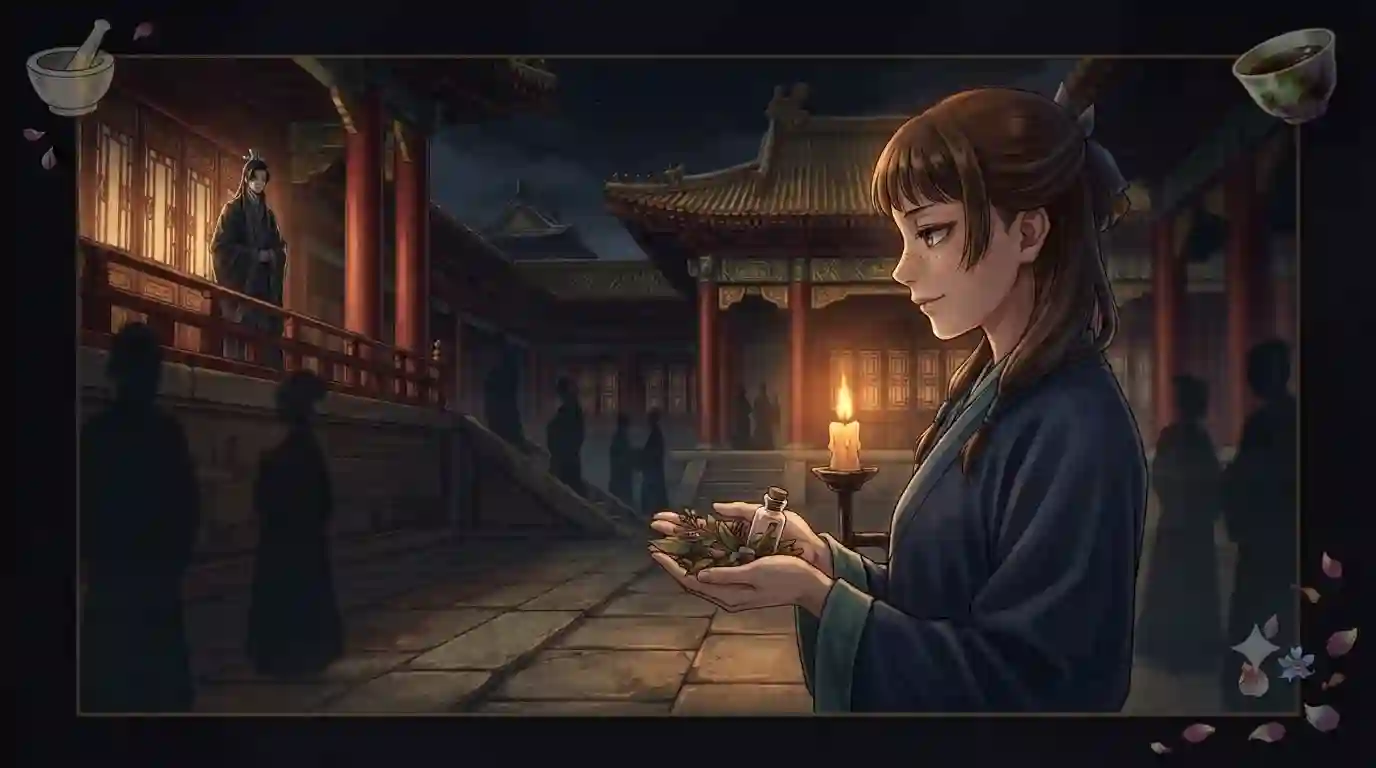
Maomao’s unassuming freckled face masks the mind of a poison-obsessed genius, and the Apothecary Diaries manga weaponizes that duality into one of the most addictive mature stories in modern comics. You don’t just read this series; you inhale it like a rare toxin, dissecting every glance, every political marriage, and every tiny vial passed in the corridors of power. This deep dive breaks down every hidden poison, the slow-burn character dynamics, the unflinching mature themes, and the exact story arcs that make the apothecary diaries manga a phenomenon no grown-up reader should skip. We’re pulling apart the art, the paneling tricks, the anime comparisons, and the moments of brutal honesty that shove this far beyond a simple historical mystery.
The Hook That Poisons You Slowly – Why Readers Can’t Look Away
There’s a particular cruelty to the way the Apothecary Diaries manga hooks you. It starts with a child dying, an imperial conspiracy, and a kidnapped girl who seems disturbingly indifferent to her own fate. Maomao, the adopted daughter of an apothecary in the red-light district, finds herself sold to the rear palace as a lowly servant. That alone would be the inciting tragedy for a lesser tale. Here it’s barely the opening paragraph. The manga doesn’t linger on her victimhood. It puts her brain on full display within the first three chapters, when she deciphers what’s killing the emperor’s infant heirs and saves a concubine with nothing but observation, herbal knowledge, and a complete lack of self-preservation instinct.
That early sequence sets the rhythm for every volume that follows. A problem festers under silk and perfume. Someone important is dying slowly, or a lady-in-waiting has been framed for something she didn’t do. Maomao appears in the background, usually with a blank expression and a piece of charcoal to test for alkaloids. She solves it not because she’s noble, but because she finds the puzzle more interesting than her own safety. The apothecary diaries manga thrives on that friction between a callous, systemic world and a protagonist who treats poison like a lover she never asked for.
What hooks mature readers isn’t just the medical detective work. It’s the quiet horror of the setting. The rear palace is a gilded cage where women’s bodies are political currency. Maomao understands this better than anyone because she grew up among courtesans who turned performance into survival. She doesn’t cry about injustice. She calculates. Every arc peels back another layer of rot beneath the beautiful brocade. The manga trusts you to sit with discomfort, to notice the servant girl whose face was destroyed by acid, the concubine who smothers her own desires, the eunuch who knows too much and says too little. You will not be spoon-fed morality. After being shown a world that seems genuine, you will be required to come to terms with it.
Story Outline – A Poison Taster’s Ascent Through the Imperial Hellscape
The plot of the apothecary diaries manga moves like a chess game played with contaminated pieces. You must understand the framework that lies underlying the episodic puzzles in order to understand why it works so well. This isn’t a simple procedural. It’s a slow-burn saga of a woman who never wanted power and keeps getting handed the most dangerous kind.
The Kidnapping That Started It All
Bandits kidnap Maomao and sell him to the rear palace. She tries to stay invisible, working as a laundry maid, until her medical curiosity gets the better of her. The emperor’s consorts, Gyokuyou and Lihua, are locked in a silent war of succession, and their infant children keep falling mysteriously ill. Maomao sends an anonymous warning about cursed face powder laced with lead. She gets caught. She expects execution. Instead, the gorgeous and terrifying Jinshi, a eunuch administrator who runs the rear palace with chilling precision, promotes her to lady-in-waiting and poison taster for Consort Gyokuyou. That’s chapter three. The rest of the series is the aftermath.
The Court Poison Arc That Defines Everything
Readers often ask where the apothecary diaries manga truly becomes itself. The answer is the garden party poisoning. When a military official’s food taster drops dead, the court expects Maomao to just “know” what happened. She does, but the solution implicates far more than a bad batch of blowfish. This arc establishes the central tension: Jinshi is using her as a weapon, and she knows it. Their dynamic twists into something uncomfortable and electric. He manipulates her curiosity. She accepts the manipulation because she can’t resist a good death riddle. It’s toxic, codependent, and completely riveting.
Below are the major plot throughlines that every new reader needs to track:
- The Consort Succession Crisis: Gyokuyou and Lihua’s rivalry isn’t personal. It’s a system designed to produce a male heir at any cost. Maomao becomes the unofficial medic who keeps both women alive while the institution tries to crush them.
- The Jinshi Enigma: He’s not a eunuch. You’ll figure that out fast, but the manga draws out the why with masterful restraint. His true identity upends every political calculation Maomao has ever made.
- Maomao’s Lineage Bomb: The mystery of her birth mother ties directly into the most dangerous family in the empire. When that secret cracks open, the series shifts from palace intrigue to full-blown survival horror with silk sheets.
- The Foreign Envoy Threat: Later arcs introduce ambassadors from other nations who bring new poisons, new desires, and a chilling reminder that the rear palace is just one small, pretty cage in a much larger slaughterhouse.
Every arc rewards rereading because Maomao’s internal narration lies to you constantly. She’s an unreliable narrator not in facts, but in feelings. She downplays her own fear, her own compassion, her own growing attachment to the people around her. The art shows what her voice hides. That’s where the true story lives.
Art Style and Paneling That Bite Like a Hidden Needle
The apothecary diaries manga doesn’t need flashy battle scenes to keep your eyes locked. Its power comes from restraint, micro-expressions, and a use of negative space that makes the palace feel both vast and suffocating. Nekokurage’s adaptation of Natsu Hyuuga’s light novels is a masterclass in how to draw tension without a single sword swing.
Character Design That Lies to You
Maomao is drawn deliberately plain. Freckles, small stature, usually hunched, often with a blank expression that borders on deadpan. She’s not moe. She’s not conventionally beautiful by manga standards, and that’s entirely the point. Her design screams “unimportant background servant” so loudly that every other character underestimates her. When her eyes do widen in genuine shock or her mouth twitches into a rare smile, the impact hits like a punch because the baseline is so controlled. Jinshi, by contrast, is drawn like a porcelain deity. His beauty is described as “a national nuisance” for a reason. The panels linger on the curve of his neck, the way his hair falls across his face, the glacial coldness in his gaze when he’s displeased. The art never lets you forget that his prettiness is a weapon and a curse.
Paneling Tricks That Mimic Slow Poison
The manga’s pacing relies on reaction shots more than action. A single panel will show Maomao’s hand stilling over a bowl of soup while her face remains completely neutral. The next panel might be a close-up of her fingertips, faintly stained. The reveal comes three pages later in a quiet word balloon. This delayed-impact paneling makes you feel like a detective alongside her. You learn to scan backgrounds for out-of-place bottles, to notice which characters aren’t making eye contact. The layout trains you to be paranoid, which is exactly the mindset Maomao lives in.
What Nekokurage does with historical detail deserves specific praise. The clothing, the architecture, the medical tools — everything is researched and immersive. When Maomao grinds herbs with a mortar and pestle, the motion lines and the texture of the powder are precise enough that you can almost smell it. The manga treats her apothecary work as sacred, not a shortcut. That fidelity grounds the more outlandish political conspiracies. You believe the poison logic because the physical world feels so tactile and true.
Mature Themes Review – Poison, Power, and What the Anime Left Out
Don’t let the pretty robes fool you. The apothecary diaries manga is built on adult foundations that the anime adaptation sometimes softens or rushes past. This is a story about bodily autonomy, sexual commodification, eugenics-level court politics, and the slow violence of institutionalized misogyny. The manga has the space to let those themes fester.
The Red-Light District Backstory That Explains Everything
Maomao grew up in the pleasure quarters where her adoptive father served as an apothecary to courtesans. She learned anatomy from syphilis cases, contraception from desperate women, and the economics of desire from watching her “big sisters” negotiate their own worth. The manga doesn’t sanitize this. Flashback panels show bandaged wrists, empty-eyed girls, and the specific horror of a system where a woman’s value has an expiration date. This backstory is why Maomao is so pathologically guarded about her own body. When Jinshi makes physical advances, her revulsion isn’t cute tsundere gag. It’s trauma. The art makes that distinction clear in the tension of her shoulders and the blankness of her stare. Recognizing that recontextualizes every “romantic” scene later.
Imperial Gynecology as a Horror Story
The rear palace exists to produce an heir, and that biological imperative poisons everything. Consorts are dosed with fertility drugs that are barely distinguishable from slow toxins. Miscarriages are treated as political sabotage until proven otherwise. Maomao, as the only person with real medical training, ends up performing pelvic exams, delivering stillborn babies, and explaining reproductive anatomy to men who consider women’s bodies a matter of state security. The manga does not look away. It draws the exhaustion in Gyokuyou’s face after her third near-fatal pregnancy. It shows the aftermath of a failed childbirth in grim detail, because that detail matters. This isn’t gratuitous. It’s the logical endpoint of a world that treats women as walking wombs. The apothecary diaries manga earns its mature label not through gore, but through an unflinching stare at the medical, emotional, and systemic consequences of imperial breeding politics.
The Sexuality That Refuses to Be Arousing
Jinshi is one of the most beautiful characters in modern manga, and the story uses that beauty as a source of almost constant discomfort. His interactions with Maomao are soaked in a power imbalance he understands perfectly and exploits frequently. He corners her in hallways, places her under house arrest, and forces her into situations where she can’t say no without endangering her position. The narrative never frames this as romantic ideal. Maomao’s internal commentary is clinical and hostile. She describes his beauty as “troublesome” and his attention as “harassment disguised as favor.” The tension isn’t “will they kiss?” It’s “will she ever trust him enough to stop expecting betrayal?” That’s a much harder question, and the manga refuses to answer it cheaply. When vulnerability finally appears between them, it’s buried under layers of sarcasm and self-protection. The maturity lies in that restraint. Intimacy is treated as a thing earned through years of demonstrated safety, not dramatic confessions.
Apothecary Diaries Manga vs. Anime – What the Panels Keep Sacred
The anime version is a faithful starting point, beautiful, and well-acted. But if you’ve only watched the show, you’re missing the internal architecture that makes Maomao one of the most complex protagonists in the seinen demographic. The apothecary diaries manga fills in every crack the television format had to rush past.
Maomao’s voiceover in the manga is a running medical file on everyone she meets. She evaluates body language like symptoms, catalogs who’s sleeping poorly based on eye redness, and mentally tests antidote combinations during casual conversations. The anime gives you glimpses of this through visual cues. The manga gives you the full, obsessive, messy internal monologue. You understand exactly why she makes each logical leap. The anime also condenses several mystery arcs, combining evidence reveals and trimming the slower deductions. The manga luxuriates in those deductions. A single locked-room poisoning can take three chapters, each panel adding one more contradictory detail until the solution snaps into place with genuine intellectual pleasure.
The romance scenes suffer the most in adaptation compression. In the anime, Jinshi’s possessiveness can read as standard shoujo smolder. In the manga, you see Maomao’s hands clench, her posture shift backward, the way she immediately starts calculating an exit strategy. The extra beats of her silent dread transform the same scene from swoony to suspenseful. In the conventional sense, it is not a love story. It’s two deeply damaged people orbiting each other with knives in their sleeves. The manga’s pacing lets that truth breathe.
Reading Order and Where to Start Without Spoiling Yourself
The apothecary diaries manga has a straightforward volume progression, but new readers often trip over the spin-off, the light novel, and the multiple adaptations. Here’s the cleanest path.
Main Manga Series
Volumes 1 through 13 (and counting) published in English by Square Enix Manga & Books. Start at volume 1, chapter 1. Do not skip ahead. The early chapters set up character dynamics that pay off twenty volumes later. The official English translation is crisp and preserves Maomao’s clinical tone perfectly.
Light Novel vs. Manga
The original light novels by Natsu Hyuuga (published by J-Novel Club) are excellent but contain more graphic medical detail and longer political monologues. Read the manga first for the visual storytelling and facial nuance. Then dive into the novels if you want the unfiltered version of Maomao’s internal monologue. The manga follows the light novel closely but rearranges some arcs for dramatic flow.
What About the “Kusuriya no Hitorigoto” Spin-Off?
There’s an alternative manga adaptation with a more comedic, simplified art style. It’s not bad, but it lacks the atmospheric weight and paneling sophistication of the Nekokurage version. If you’re here for the mature themes and psychological depth, stick to the main apothecary diaries manga. The spin-off works better as a light companion after you’ve already fallen in love with the story.
The Slow-Burn Character Web – More Than Just Maomao and Jinshi
A common mistake is treating this series as a two-person drama. The apothecary diaries manga builds an ensemble so rich that side characters often hijack entire arcs with their own moral catastrophes.
Consort Gyokuyou is the sun everyone orbits, and she knows it. Beneath her warm smiles and maternal affection lies a political operator who has survived assassination attempts, stillbirths, and a husband who won’t protect her. She’s not a victim. She’s a survivor who chooses kindness as strategy and lets people underestimate her. The manga draws her most vulnerable moments with aching tenderness: holding her sick infant in a dark room, alone, while the palace parties outside. The reader’s conscience is represented by Gaoshun, Jinshi’s patient attendant. He sees the manipulation, the cruelty, the emotional shortcuts his master takes, and he says nothing because he serves a larger game. His silence is louder than any speech bubble. Then there’s Lihua, the other consort, whose arc from naive romantic to hardened survivor mirrors the series’ overall thesis: the palace will break you or you will learn to become a wall. Her recovery from the lead poisoning that almost killed her son is one of the manga’s quiet masterpieces of character writing.
Even the servants and background guards have names, motives, and minor arcs that resurface volumes later. The apothecary diaries manga operates on the philosophy that everyone in the rear palace is trapped, even the jailers. Tracking these side stories turns a casual read into a richly layered experience.
Where the Story Is Headed – Late Arc Predictions and Unresolved Threads
If you’re caught up through recent volumes, you’re staring at a powder keg. Maomao’s parentage secret is now an active liability. The man who fathered her occupies a position of power that makes Jinshi look like a pawn. Her biological connection to that bloodline puts her in direct conflict with the emperor’s political survival. The manga is setting up a collision where Maomao must choose between the family who raised her in a brothel and the family that sees her as a genetic threat.
Jinshi’s own identity crisis is accelerating. His “eunuch” disguise is eroding, and the people who need him to maintain it are getting desperate. Every volume tightens the noose around his neck. His relationship with Maomao is transforming from manipulation into genuine, terrified attachment, and he has no script for that. The later chapters show him fumbling attempts at honesty that Maomao interprets as new strategies. Watching these two try to communicate without the shield of power dynamics is excruciating and hopeful in equal measure.
The international politics are also expanding. Envoys from neighboring nations bring diseases, negotiation tactics, and a threat of invasion that makes the rear palace seem laughably small. Maomao’s skills are becoming an imperial asset, not just a domestic convenience. The series is evolving from palace mystery into geopolitical thriller, and the transition feels seamless because the foundation was always about how individual bodies become battlegrounds for larger forces.
Why the Apothecary Diaries Manga Is Essential Reading for Mature Comic Fans
There’s a moment, somewhere around volume four, where you realize you’ve been holding your breath for an entire chapter. That’s the power of this series. It doesn’t rely on jump scares or explicit violence. It uses the slow, creeping dread of systemic entrapment. Every character is compromised. Every solution creates a new problem. Every act of love is shadowed by the threat of loss. The apothecary diaries manga respects its audience enough to present a world without easy moral answers, where a woman’s intelligence is her only shield and poison is the truest language of the powerful.
The medical realism, the feminist critique, the historical grounding, and the agonizing character development combine into something rarer than it should be: a story for adults that doesn’t need to scream about being for adults. You’ll find no cheap fanservice, no exploitative gore, no shock-value twists. You will find a quiet, devastating examination of what it means to survive inside a beautiful prison, armed with nothing but your mind and a deeply inconvenient sense of curiosity.
Maomao’s journey is far from over. The palace still has decades of secrets buried in its foundations. Will Jinshi’s mask finally shatter? Will Maomao ever allow herself to want something that isn’t a poison sample? Will the empire survive the truths it’s been hiding? Drop your most unhinged theory in the comments. I read every one, and I’m absolutely certain someone out there has noticed a panel I missed. Bookmark this site and come back for more uncensored deep dives into the mature manga, webtoons, and comics that actually respect your brain.
Frequently Asked Questions About the Apothecary Diaries Manga
1. Is the Apothecary Diaries manga appropriate for teenagers?
The series deals heavily with reproductive coercion, sexual power dynamics, and the realities of a historical pleasure district. While the violence is rarely graphic, the thematic content is mature and often unsettling. It’s best suited for readers 16 and older who can handle nuanced discussions of bodily autonomy and institutional misogyny.
2. How many volumes of the Apothecary Diaries manga are currently available in English?
Thirteen volumes are currently published in English by Square Enix Manga & Books, with volume 14 scheduled for release later this year. The series is ongoing in Japan with no announced end date.
3. Does the Apothecary Diaries manga have romance, or is it purely a mystery?
Romance is present, but it’s an extremely slow-burn, psychologically complex dynamic between Maomao and Jinshi. The manga does not treat it as a traditional love story. It explores trust, power imbalance, and emotional survival rather than grand confessions, which frustrates some romance readers but deeply satisfies those seeking character-driven tension.
4. Is the manga better than the anime adaptation?
The anime is a faithful and beautifully produced adaptation, but the manga offers a richer internal experience thanks to Maomao’s unfiltered narration, more detailed mystery deductions, and additional panels that capture her micro-expressions and emotional suppression. Many fans read both and find the manga the definitive version for depth.
5. Where can I legally read the Apothecary Diaries manga online?
Digital chapters are available for purchase through Square Enix’s Manga UP! app and global platforms like BookWalker, Amazon Kindle, and ComiXology. Physical volumes are sold through major book retailers. Supporting official releases ensures the creative team continues producing the story.
6. What are the main mature themes explored in the Apothecary Diaries manga?
The series examines reproductive control, the commodification of women’s bodies in imperial systems, medical ethics in a pre-modern setting, class-based powerlessness, and the long-term psychological impact of sexual trauma. It uses historical fiction to critique patriarchal structures without ever becoming preachy or losing its narrative tension.