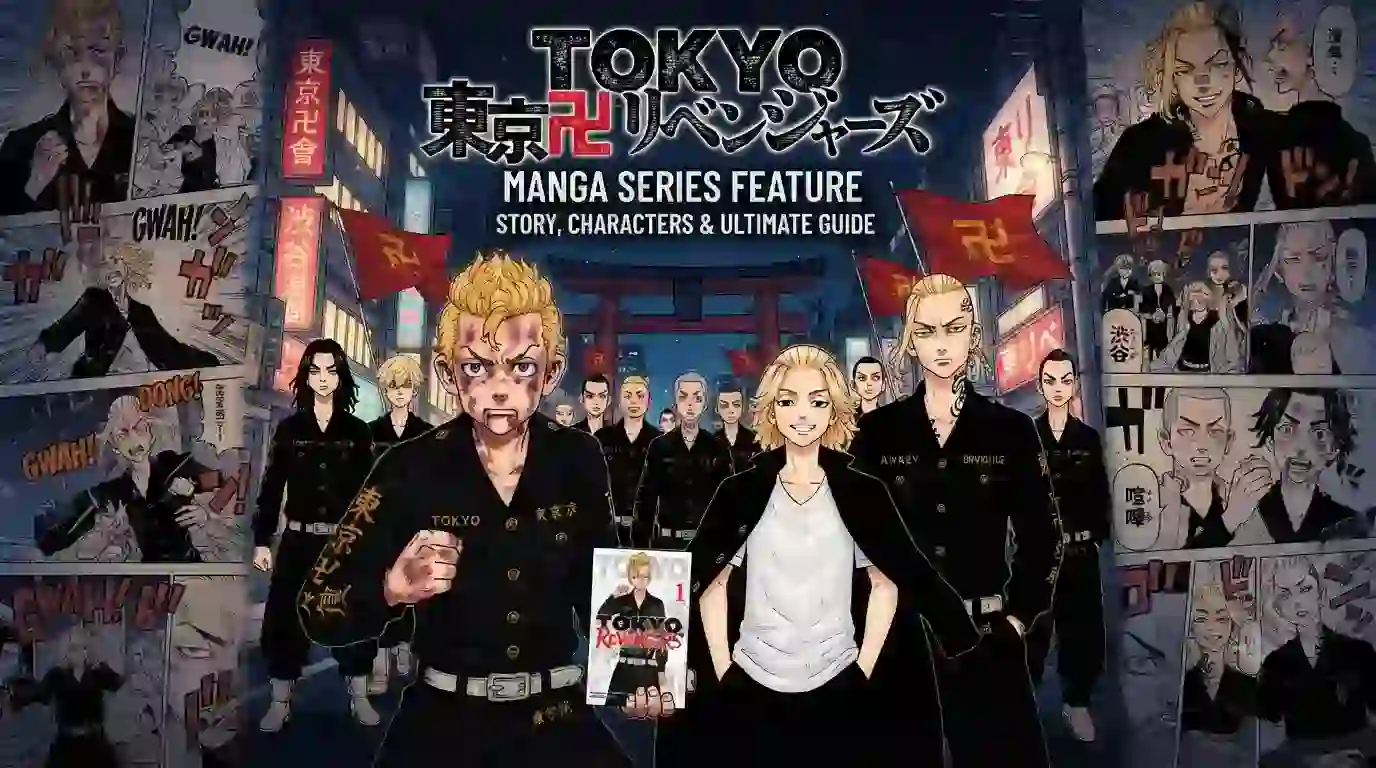
Ken Wakui’s ink doesn’t draw—it screams. The first page of the Tokyo Revengers manga grabs you by the collar with frantic, unpolished linework and a protagonist who looks like he lost every fight life threw at him. You don’t read this series; you survive it. It’s a blood-spattered love letter to broken boys, second chances, and the terrifying magnetism of charisma. If you think you know gang stories, the Tokyo Revengers manga is about to rearrange your entire emotional skeleton. Over the next few thousand words, I’m cracking open every festering wound this masterpiece hides—from the infamous Bonten arc’s psychological horror to the panel-by-panel brutality that makes the anime feel like a sanitized highlight reel. You’ll understand why Mikey’s smile is more dangerous than any weapon, how Takemichi weaponizes tears into armor, and why that ending still splits skulls in half.
Story Blueprint: From Crybaby Hero to Time-Leaping Avenger
The Tokyo Revengers manga doesn’t hand you a power fantasy. It shoves a 26-year-old loser named Takemichi Hanagaki into a time-leap mechanic that is as emotionally devastating as it is narratively genius. The premise is simple on the surface: after learning his middle-school girlfriend Hinata Tachibana dies in a gang conflict, Takemichi gets pushed onto train tracks and suddenly tumbles back 12 years. He’s given a chance to rewrite the future by infiltrating the Tokyo Manji Gang and saving everyone he failed. What follows is a masterclass in tension, regret, and the exhausting weight of rewriting fate.
The Core Time-Leap Mechanic
Time travel here isn’t a cool gadget. It’s a gut punch. Takemichi can only leap back when he shakes hands with Naoto, Hinata’s younger brother who survives as a detective in the future. Every trip rewrites the present in unpredictable, often catastrophic ways. The Tokyo Revengers manga makes the rules brutally clear: you can’t save everyone without destroying something else. Each handshake becomes an act of desperation, and the narrative builds an addictive loop—leap, suffer, return, witness fresh horror, repeat. This mechanic anchors the entire saga and forces readers to ask the same question Takemichi does: “Can a worthless crybaby actually change the course of destiny, or is he just staining his hands with more blood?”
Takemichi’s Unlikely Growth
Let’s be honest—Takemichi is a pathetic hero on paper. He cries. He gets beaten senseless. He soils himself in fear. And yet, the Tokyo Revengers manga turns those traits into his greatest weapons. His refusal to stay down, his complete absence of an ego, and his ugly, snot-nosed determination gradually earn him the loyalty of monsters. This isn’t a muscles-and-magic glow-up. It’s a spiritual durability that makes hardened killers kneel. Watching him evolve from a laughingstock into Toman’s heart is one of the most emotionally honest character arcs in modern shonen. He never stops crying. He just learns that tears can be fuel.
The Toman Saga Across Eras
The story spans multiple timelines, each more distorted than the last. You’ve got the original past where Toman is a brotherhood of misfits under Mikey’s sunny yet fragile leadership. The present timelines degenerate into hellscapes where Mikey becomes a hollowed-out crime lord, Kisaki Tetta schemes like a demonic chess master, and everyone Takemichi loves is either dead or irreversibly broken. The Tokyo Revengers manga structures its arcs—Moebius, Valhalla, Black Dragon, Tenjiku, and the final Bonten nightmare—like a crescendo of trauma. Every victory costs a pound of flesh, and the narrative never lets you forget that the smiling boys of the past are the walking corpses of the future.
Ken Wakui’s Delinquent Brush of Chaos: Art Style & Visual Storytelling
Let’s kill a misconception immediately: the Tokyo Revengers manga art isn’t polished in a traditional sense. It’s rabid. Wakui’s style thrives on jagged motion lines, exaggerated sneers, and character faces that twist into almost grotesque expressions of rage, agony, or madness. This isn’t a flaw. It’s the visual language of emotional violence. The artwork sacrifices anatomical perfection for raw feeling, and that’s exactly why the series hits harder than a motorcycle chain to the ribs.
Ken Wakui’s Gritty Linework
Wakui draws with a punk-rock scratchiness that makes every panel feel like a live wire. Eyes bulge with panic, fists distort on impact, and rain streaks across faces like scars. In the Tokyo Revengers manga, even quiet conversations crackle with tension because the linework itself seems unstable, ready to snap. When Mikey’s expression flips from childlike innocence to vacant darkness, the art doesn’t telegraph it with a simple shadow—it hollows out his entire face. That distinct roughness gives the manga an underground fanzine authenticity, as if you’re holding something dangerous rather than reading a mass-market hit.
Panel Flow & Fight Choreography
Fights in this series aren’t elegant dance-offs. They’re ugly, graceless brawls where knees connect with teeth and nobody walks away clean. Wakui uses vertical, narrow panels to simulate speed and claustrophobia, then suddenly breaks into a massive double-page spread to land a knockout blow. One standout sequence is Mikey’s infamous kick against Kazutora in the Valhalla arc—the paneling slows time, isolates the foot meeting the skull, and then detonates into a full-page silhouette that feels like a murder. The Tokyo Revengers manga reads like a storyboard for an adrenaline seizure. It understands rhythm so instinctively that you’ll hear the impact sounds in your head.
Character Design That Screams Attitude
Every major player wears their identity like a gang patch. Draken’s towering pompadour and dragon tattoo broadcast brute reliability. Mikey’s tiny frame and vacant, wide eyes make his brutality psychologically jarring. Chifuyu’s undercut and open face scream loyal sidekick. Then there’s Kisaki, designed to look like an unsettlingly calm honor student—a predator hiding in plain sight. The Tokyo Revengers manga uses fashion, posture, and subtle facial ticks to do heavy characterization lifting. You can tell a character’s entire arc trajectory just by how Wakui draws their knuckles.
Mature Themes & Delinquent Philosophy
Strip away the time travel, and you’re left with a vicious character study about damaged boys building families out of violence because no one else will have them. The Tokyo Revengers manga is fundamentally a tragedy wearing a shonen coat. It dismantles toxic masculinity while simultaneously showcasing the brotherhood forged in fistfights. Every theme is served raw and bleeding.
Brotherhood, Trauma, and the Cycle of Violence
Toman isn’t a gang because it wants territory. It’s a gang because its members are orphans, abused kids, and outcasts who found belonging in shared pain. The Tokyo Revengers manga makes this heartbreakingly clear: Mikey, Draken, Baji, Kazutora, and Mitsuya aren’t evil; they’re traumatized children clinging to each other with bloody fingernails. The cycle of violence perpetuates because the only language they were ever taught is retaliation. Wakui never glorifies the fights. He shows the aftermath—funerals, prison sentences, families shattered, and lifelong guilt rotting characters from the inside. Baji’s sacrifice isn’t heroic. It’s the inevitable, gut-wrenching endpoint of a boy who only knew how to express love through self-destruction.
Dark Impulses: Mikey’s Mental Unraveling
Mikey is the soul of the Tokyo Revengers manga and also its most devastating horror. His “dark impulses” aren’t a supernatural gimmick so much as the clinical manifestation of unresolved childhood trauma, survivor’s guilt, and a congenital emptiness that devours him every time he loses a loved one. When the manga plunges into the Bonten timeline and shows Mikey as a hollow drug lord, it’s not an edgy twist. It’s the logical conclusion of a boy who was failed by every adult and who internalized the belief that he poisons everything he touches. His descent is depicted with terrifying intimacy—the panel where adult Mikey stares at Takemichi with dead eyes and whispers, “Kill me,” is one of the bleakest moments in shonen history.
Redemption Without Sugarcoating
Here’s where the Tokyo Revengers manga gets philosophically brutal: redemption isn’t an apology, and forgiveness isn’t always possible. Characters like Kazutora carry the weight of murder even after seeking atonement. Kisaki’s demise isn’t satisfying; it’s pathetic and hollow, proving that obsession built on nothing will collapse into meaninglessness. The series argues that you can’t undo scars, but you can choose to face forward and bear the pain. Takemichi’s final mission isn’t about erasing the darkness—it’s about standing beside the people he loves while they fight their own demons. It’s an adult, unflinching message that most shonen lack the guts to deliver.
The Controversial Final Arc & Ending Breakdown
No discussion of the Tokyo Revengers manga is complete without wading into the blood-soaked battlefield of its ending. The final arc split the fandom like a meat cleaver. I’m going to give you the uncensored truth: it’s messy, it’s rushed, it defies conventional payoff—and it’s also perfectly aligned with the series’ core thesis.
The Bonten Timeline Horror
Before the final leap, the manga drops us into the Bonten future—a timeline where Mikey reigns over Japan’s criminal underworld as an emotionless, suicidal kingpin. This segment is pure psychological horror. Draken is dead. Mitsuya runs a fashion empire that masks his misery. Chifuyu is a broken man. Seeing the invincible Toman reduced to this hollow pantheon of suffering is Wakui’s way of showing that a future without genuine connection is worse than death. The Tokyo Revengers manga weaponizes its own nostalgia here, twisting the happy memories of childhood brawls into poison.
The Final Time Leap and Its Ambiguity
Takemichi’s last leap aims to stop Mikey’s darkness at its root—a childhood encounter with a cursed plane, a death, and the birth of the dark impulse. The climax is chaotic, metaphysical, and more about emotional resonance than logical consistency. The finale gifts us a timeline where everyone survives, including characters who died brutally in other futures. Critics call it a cop-out; I call it a deliberate fairy tale. The Tokyo Revengers manga spent 31 volumes proving that reality is cruel and random. Its ending chooses radical hope as an act of defiance. Takemichi doesn’t beat Mikey with a punch. He simply stays. That’s the victory. It’s not about flawless narrative mechanics—it’s about a crybaby refusing to abandon his friend across infinite lifetimes. That ending, whether you love it or hate it, will sit in your chest like a stone for weeks.
Tokyo Revengers Manga vs. Anime: What the Adaptation Leaves Bleeding on the Cutting Room Floor
The anime brought explosive motion and a stellar voice cast, but it sanded off the edges that make the Tokyo Revengers manga so uniquely jagged. Several crucial layers get lost:
- Internal Monologue Gutting: The anime trims Takemichi’s frantic inner spirals, which are the psychological backbone of the story. The manga’s narration drowns you in his terror, making every fleeting courage feel monumental.
- Brutal Visual Nuance: Wakui’s scratchy, intentionally ugly expressions are cleaned up for broadcast. Mikey’s “dark impulse” face in the manga is nightmarish; the anime makes it sleek and sinister, losing the raw mental illness edge.
- Truncated Arcs and Side Characters: The Black Dragon arc and especially the build-up to Bonten suffer from compression. Manga-only moments like Senju’s deeper backstory or Sanzu’s progressively unhinged facial scarring add crucial texture that the adaptation skims over.
- Uncensored Violence and Emotional Cruelty: The Tokyo Revengers manga doesn’t cut away from the psychological cruelty. Kisaki’s manipulations, the aftermath of Emma’s death, and Izana’s complete mental collapse hit with unsterilized force on the page.
If you only watched the anime, you consumed a diluted version of the despair. Read the source material to taste the real poison.
Why the Tokyo Revengers Manga Still Demands Your Shelf Space in 2026
This series isn’t a relic. It’s a permanent scar on the shonen landscape. Ken Wakui created something that refuses to be comfortable—a story about second chances that never pretends the first wound didn’t fester. The Tokyo Revengers manga will make you miss friends you’ve never had and mourn timelines that never existed. Its characters aren’t heroes; they’re survivors with blood under their nails and loyalty engraved on their broken bones. If you need a manga that blends time-travel sci-fi, gut-churning tragedy, and the fiercest declaration that even a crying failure can change the world, stop searching. You’ve found it. The art will bruise you. The story will hollow you out. And that’s exactly the point.
Which Tokyo Revengers manga arc carved the deepest hole in your chest—the Tenjiku bloodbath, the Bonten future nightmare, or the heartbreaking final handshake? Slam your pain into the comments. Bookmark this page for more uncensored deep dives into mature manga, anime, and the comics that aren’t afraid to bleed.
Frequently Asked Questions About the Tokyo Revengers Manga
Is the Tokyo Revengers manga finished?
Yes, the Tokyo Revengers manga concluded in November 2022 after 278 chapters compiled into 31 volumes. The full story is complete, with no ongoing serialization.
Where can I read the Tokyo Revengers manga legally?
You can read the Tokyo Revengers manga officially in English through Kodansha’s K Manga app and website. Physical volumes are published by Kodansha Comics and available at most major book retailers.
How many volumes are in the Tokyo Revengers manga?
There are precisely thirty-one tankōbon volumes in the Tokyo Revengers manga. A few special booklets and a character book also exist, but the main narrative fits neatly into those 31 volumes.
Does the Tokyo Revengers manga have a happy ending?
The Tokyo Revengers manga delivers a highly debated finale. It presents a timeline where all major characters survive and find peace, functioning as an idealized happy ending. However, its execution divides fans—some view it as a beautiful earned miracle, others as a rushed evasion of consequence. It is emotionally uplifting but narratively controversial.
What age rating is the Tokyo Revengers manga?
The Tokyo Revengers manga is rated Older Teen (16+) by Kodansha. It contains intense violence, gang warfare, psychological trauma, character death, drug references, and mature thematic content that isn’t appropriate for younger readers.
Is the Tokyo Revengers manga better than the anime?
In terms of raw emotional depth, uncensored internal monologue, and unfiltered artwork, the Tokyo Revengers manga surpasses the anime adaptation. The manga includes cut content, more brutal depictions of violence, and a complete narrative ending that the anime has yet to fully cover. For the purest, most devastating version of the story, the manga is essential.
Who is the strongest character in the Tokyo Revengers manga?
Physical strength rankings fluctuate, but Mikey is consistently depicted as the undisputed fighting prodigy of the Tokyo Revengers manga. His kicks are compared to bullets, and his agility and instinct in combat are supernatural. Other top-tier fighters include South Terano, Izana Kurokawa, and Draken, but none can topple Mikey in his prime.