
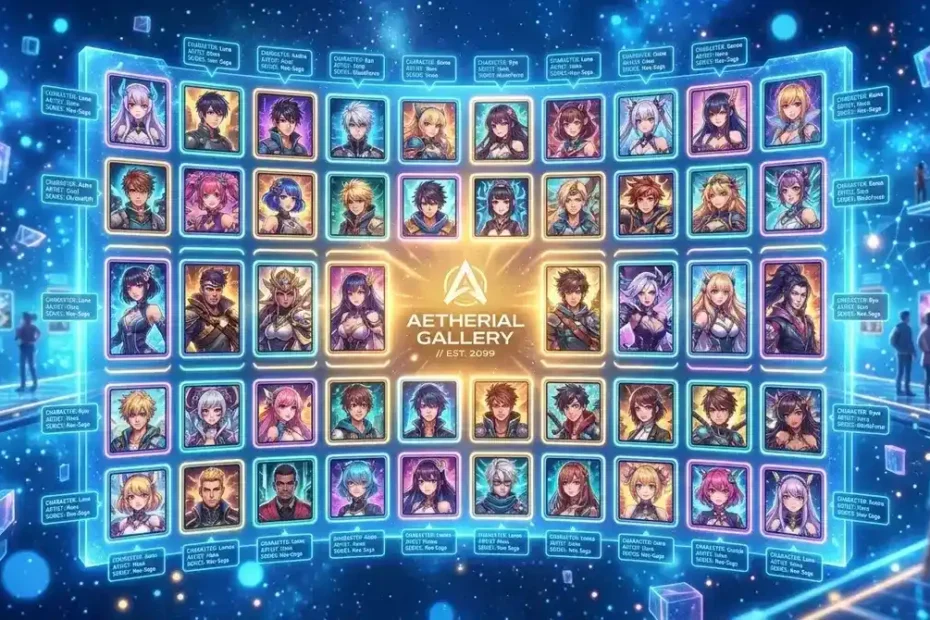
Finding organized anime art online feels nearly impossible. You scroll through cluttered galleries for hours, only to lose track of the illustrations you actually wanted to save. Danbooru fixes this problem with a community-driven tagging system that categorizes millions of anime images so you find exactly what you need in seconds.
What Is Danbooru and Why Do Artists Love It?
Danbooru is a community-powered image board built specifically for anime and manga-style artwork. Users upload illustrations and attach detailed descriptive tags to every single image.
This tagging approach turns a massive collection of art into a searchable library. Artists and fans can locate specific characters, poses, color palettes, or art styles without endless scrolling.
The platform launched in 2005 and has grown into one of the largest anime art archives on the internet. Its clean interface and strict organizational standards set it apart from general image-hosting sites.
Who Created Danbooru and When Did It Launch?
A developer known by the handle “albert” built the original site as a personal project. The goal was simple: create a better way to sort and find anime illustrations online.
The site went live in 2005 and quickly attracted a dedicated user base. Early contributors established the tagging conventions that still govern the platform today.
Over the years, the codebase evolved into an open-source project. This allowed other communities to fork the software and build their own image boards using the same architecture.
How Does the Danbooru Tagging System Organize Art?
Every image uploaded to the platform receives multiple tags that describe its content in granular detail. Tags cover character names, series titles, clothing, backgrounds, emotions, and even specific artistic techniques.
The system uses four main tag categories:
- General tags: Describe visual elements like “blue hair” or “outdoor scene”
- Character tags: Identify specific fictional characters by name
- Copyright tags: Link images to their source anime, manga, or game
- Artist tags: Credit the original creator of the artwork
This layered approach means a single search can combine dozens of filters. You can find every illustration of a specific character wearing a specific outfit drawn by a specific artist.
The tagging infrastructure has become so thorough that researchers now reference it as a model for metadata organization. According to the official Danbooru documentation, the site hosts over five million tagged images as of recent counts (Source: danbooru.donmai.us/wiki_pages).
What Types of Art Can You Find on Danbooru?
The platform focuses primarily on anime and manga-style illustrations. You will find digital paintings, fan art, official promotional artwork, and screencaps from animated series.
Popular content categories include:
- Character portraits and full-body illustrations
- Action scenes from shonen and mecha anime
- Slice-of-life compositions with detailed backgrounds
- Crossover fan art blending multiple series
- Original characters designed in anime aesthetics
The breadth of content makes the site a go-to reference for artists studying composition, color theory, and character design within the anime tradition.
How Do You Search for Specific Anime Art on Danbooru?
The search bar accepts multiple tags separated by spaces. Typing “hatsune_miku blue_dress outdoors” returns every image matching all three criteria simultaneously.
You can also exclude tags using a minus sign. Adding “-monochrome” filters out black-and-white images from your results.
Advanced users take advantage of tag counts and ordering options. Sorting by “score” surfaces the most community-upvoted illustrations first, which helps surface high-quality work quickly.
Is Danbooru Safe for All Audiences?
The main site hosts content across all rating levels, including mature material. This means it is not appropriate for younger users without supervision.
For a filtered experience, the sister site Safebooru offers the same tagging system but restricts results to general-audience content only. Safebooru pulls from the same database while applying strict content filters automatically.
Parents and educators should know that the main platform requires users to create accounts and adjust settings to hide explicit material. The default view does include adult content, so awareness matters.
How Does Danbooru Compare to Other Image Boards?
Several platforms share the “booru” architecture, but each carries distinct differences. The table below breaks down the key distinctions.
| Feature | Danbooru | Gelbooru | Safebooru | Pixiv |
|---|---|---|---|---|
| Primary Content | Anime art | Anime and general art | Safe anime art | Anime and original art |
| Tagging Depth | Extremely detailed | Moderate | Moderate | Minimal user tags |
| Content Rating | All ratings | All ratings | General only | All ratings (filtered) |
| Open Source | Yes | No | Yes | No |
| Artist Attribution | Strict enforcement | Loose | Loose | Built-in (artist profiles) |
| Community Moderation | Active volunteer staff | Limited | Limited | Corporate moderation |
| Search Flexibility | Multi-tag Boolean | Basic multi-tag | Basic multi-tag | Keyword-based |
| Monthly Visitors | Millions | Hundreds of thousands | Hundreds of thousands | Tens of millions |
Danbooru stands out for its tagging precision and strict attribution rules. Pixiv attracts more traffic overall but lacks the granular search capabilities that make booru-style sites valuable for targeted research.
What Are the Community Rules on Danbooru?
The platform enforces clear guidelines to maintain quality and respect for creators. Users must tag images accurately, credit artists whenever possible, and avoid uploading low-resolution duplicates.
Key rules include:
- Do not upload artwork without proper artist attribution
- Avoid tagging images with irrelevant or misleading descriptors
- Report stolen or misattributed content to moderators
- Respect content rating categories when uploading new images
Volunteer moderators review flagged posts daily. This community-driven policing keeps the database reliable and trustworthy for all users.
How Can Artists Upload Work to Danbooru?
Any registered user can submit images to the platform. The upload process asks you to attach relevant tags, select the correct content rating, and provide a source link to the original artist.
Artists who discover their work already uploaded can claim their tag and request corrections. The community takes attribution seriously, and false claims get removed quickly.
Uploading your own work gives you visibility within a massive archive. Many illustrators report gaining new followers after their art appeared on the platform with accurate tags.
Why Do AI Developers Use Danbooru Datasets?
The detailed tagging system caught the attention of machine learning researchers. Each image carries structured metadata that pairs visual content with precise text descriptions.
This structure makes the dataset ideal for training image-generation models. Projects like Stable Diffusion and NovelAI have used subsets of booru-tagged data to teach AI systems how to interpret and reproduce anime art styles.
A 2022 study published on arXiv examined how large-scale tagged image datasets influence text-to-image model performance (Source: arxiv.org/abs/2208.12240). The researchers noted that structured tagging dramatically improves output accuracy compared to unstructured image collections.
This connection has sparked debate about consent and copyright. Many artists on the platform have voiced concerns about their work being used in AI training without permission.
What Makes the Danbooru Tagging System Unique?
Most image platforms rely on broad keywords or algorithmic suggestions. Danbooru takes the opposite approach by enforcing human-curated, standardized tags across every single upload.
The tag wiki serves as a living dictionary. Contributors write definitions, usage notes, and alias mappings for each tag to prevent fragmentation.
For example, the tags “blue_eyes” and “azure_eyes” resolve to a single canonical entry. This eliminates the duplicate-tag problem that plagues sites like DeviantArt or Tumblr.
How Has Danbooru Shaped Online Anime Culture?
The platform changed how fans interact with anime artwork. Before booru-style sites, finding a specific scene or character illustration required digging through disorganized forum threads.
Now, fans use the archive as a visual encyclopedia. Cosplayers reference tagged poses, fan-fiction writers study character expressions, and digital artists analyze trending composition styles.
The influence extends beyond fandom. Design studios and game developers reference the archive during pre-production to study visual trends in anime aesthetics. According to a 2023 report by Anime News Network, community-curated image databases have become essential research tools across the anime industry (Source: animenewsnetwork.com).
What Should New Users Know Before Joining Danbooru?
Creating an account takes less than a minute and unlocks full search capabilities. Free accounts can browse and search, while higher-tier accounts gain access to advanced filtering and upload privileges.
New members should spend time reading the tagging guidelines before contributing. Accurate tags keep the system functional, and the community rewards helpful contributors with elevated account levels.
Start by searching for your favorite anime series or characters. You will likely discover artwork you have never seen before, organized exactly the way you need it.
The anime art world moves fast, and staying connected to the best illustrations requires the right tools. Danbooru gives you instant access to millions of tagged images, a passionate community, and a search system that actually works. Create your free account today, explore the tags that match your interests, and start building your personal art library. Your next favorite illustration is already waiting in the archive.