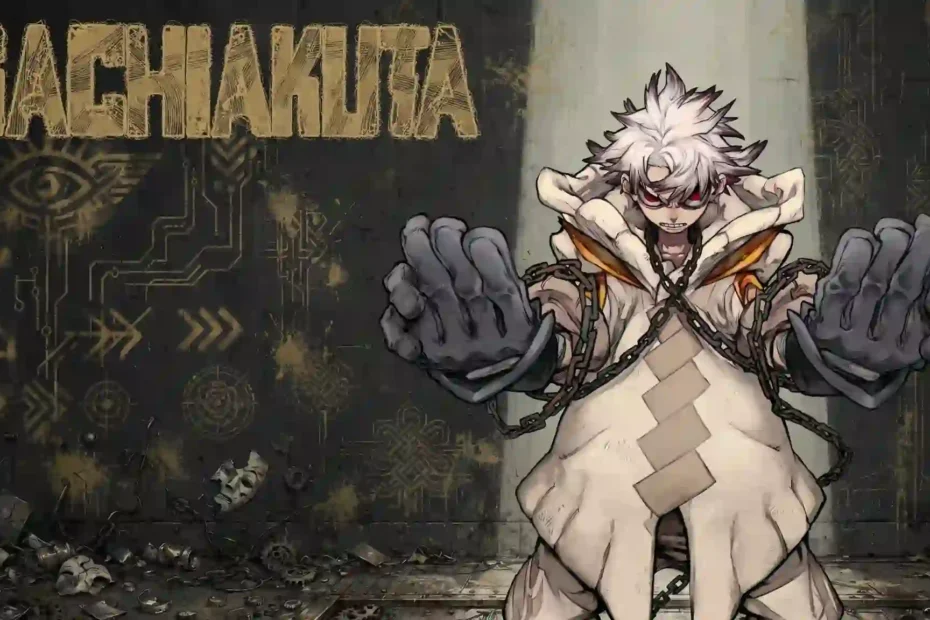
Searching for kigachiakuta can leave you with unclear titles, spoiler-heavy summaries, and outdated anime news. That makes it hard to know what the story is, where to start, or which information you can trust. This spoiler-light guide explains Gachiakuta’s official title, its characters, its unusual powers, and your reading and viewing options, so you can choose a starting point without having the story’s biggest surprises ruined.
What does kigachiakuta refer to?
If you searched kigachiakuta, this guide assumes you mean Gachiakuta, the manga by Kei Urana with graffiti design by Hideyoshi Andou. Its anime adaptation comes from Bones Film. Kodansha and the official anime website use Gachiakuta as the title, not the supplied search spelling.
Gachiakuta follows Rudo, a boy who lives in a poor community within a floating society. After authorities falsely accuse him of murder, they throw him into the Pit, where discarded waste and dangerous creatures threaten his life.
The series combines action, dark fantasy, survival, and a mystery about injustice. Its defining idea connects the value people give to objects with the value society gives to human beings.
Use the official spelling when checking bookstores, streaming catalogs, and release announcements. That helps you find the intended series without confusing a search variation with a separate title.
What is kigachiakuta about?
Gachiakuta begins with a sharp divide between people who enjoy comfort and people who struggle beneath their judgment. Rudo belongs to the latter group. He lives with Regto, the man who raised him, and survives partly by recovering things others throw away.
A false murder accusation destroys that fragile life. The society above treats exile into the Pit as punishment, sending Rudo into the same abyss that receives its rubbish.
Below, survival requires more than anger. Rudo encounters trash beasts, discovers a world he does not understand, and meets Enjin, who introduces him to the Cleaners.
The story’s starting questions are clear:
- How can Rudo survive somewhere so dangerous?
- Can he find a way back to the world above?
- Who caused the crime for which he took the blame?
- What can he learn from people his former society ignores?
Those questions give the battles a purpose beyond winning. Rudo wants the truth and a route home, but the people he meets force him to respond to problems beyond his own revenge.
What should you know at a glance?
This table separates stable background facts from details that need fresh checking. The source column names the primary organization responsible for the information rather than a fan database.
| Topic | Verified information | Why it matters | Primary source |
|---|---|---|---|
| Official title | Gachiakuta | Use this name for accurate catalog searches | Kodansha; official anime website |
| Manga creator | Kei Urana | Identifies the creator of the original manga | Kodansha |
| Graffiti design | Hideyoshi Andou | Credits the artist behind the graffiti contribution | Official anime website |
| Japanese serialization | Began in February 2022 in Weekly Shōnen Magazine | Establishes the manga’s publication background | Official anime website |
| English publisher | Kodansha USA | Identifies the official English editions | Kodansha |
| English Volume 1 | Released January 16, 2024 | Gives English readers a verified starting edition | Kodansha |
| Main character | Rudo | Anchors the story and its opening mystery | Official anime website |
| Core organization | The Cleaners | Explains the group that fights trash beasts | Official anime website |
| Anime studio | Bones Film | Distinguishes animation production from manga creation | Official anime website |
| First anime season | Began in July 2025; the official episode guide lists 24 episodes | Helps viewers identify the first-season sequence | Official anime website |
| Second anime season | Officially confirmed | Separates a real announcement from speculation | Official anime website |
| English manga formats | Print and digital | Lets readers choose their preferred format | Kodansha |
| Publisher age rating | 16+ for the English manga | Helps families make an informed choice | Kodansha |
| International streaming | Crunchyroll announced streaming across specified territories | Availability still requires a local catalog check | Crunchyroll |
Dates for future releases, subscription terms, and language options can change. Check the publisher or regional distributor before you buy an edition or subscribe to a service.
Who created Gachiakuta, and what does each artist contribute?
The creative names to know when researching kigachiakuta are Kei Urana and Hideyoshi Andou. Urana created the manga, while Andou receives the official graffiti-design credit. Those roles deserve separate recognition.
Graffiti forms part of the work’s visual identity, alongside its character art and action. That collaboration gives readers a reason to notice lettering, surface marks, and the look of the world, not only faces and weapons.
Kodansha publishes the manga, and its English catalog identifies Urana as the author. The original Japanese series began in Weekly Shōnen Magazine in February 2022, according to the official anime website.
The adaptation has its own production team. The official credits name Fumihiko Suganuma as director, Hiroshi Seko for series composition, Satoshi Ishino for character design and chief animation direction, and Taku Iwasaki for music.
Keep these distinctions in mind when discussing the series. The manga’s creators, its publisher, and the anime’s production staff contribute different kinds of work; one credit does not replace another.
How do the Sphere, the Pit, and the Ground fit together?
The Sphere is the floating society where Rudo begins his life. Its social divisions shape the opening conflict: residents of the slums face discrimination, while people with greater status can distance themselves from poverty and waste.
The Pit is the feared abyss into which that society throws rubbish and people it condemns. For Rudo, the fall turns a familiar social injustice into an immediate struggle to stay alive.
The Ground refers to the world below. It contains more than a rubbish heap: people live there, organizations operate there, and Rudo must learn how its communities survive.
For a beginner, the simplest distinction is:
- Sphere: The floating society above.
- Pit: The abyss associated with disposal and exile.
- Ground: The inhabited world below that Rudo must explore.
Do not assume that the upper society’s description of the lower world tells the whole truth. The opening premise already shows how status influences what people believe about others.
This setting also makes inequality easy to picture. Those above remove unwanted things from sight, while those below face the consequences; the distance between them serves both the adventure and the story’s social themes.
Who are the main characters in kigachiakuta?
Start with Rudo, Regto, Enjin, Zanka, and Riyo rather than trying to memorize the entire cast. Their early roles explain the emotional stakes, the Cleaners, and the basic rules of combat.
The official anime profiles establish these introductions. The table avoids later secrets, hidden motives, and major outcomes.
| Character | Early role | Object or skill to recognize | What to watch for |
|---|---|---|---|
| Rudo | Protagonist, falsely accused and cast into the Pit | His gloves and his attention to discarded objects | How he responds to rejection and unfamiliar help |
| Regto | The man who raised Rudo | He gave Rudo his gloves | The importance of care in Rudo’s earlier life |
| Enjin | Cleaner who finds Rudo and recognizes his potential | An umbrella used as a Vital Instrument | His role in introducing Rudo to the Cleaners |
| Zanka | Cleaner appointed to train Rudo | A stick or staff used as a Vital Instrument | The difference between talent and practiced skill |
| Riyo | Member of the Cleaners’ Team Akuta | Scissors called the Ripper, wielded with her feet | Her playful manner and practical approach to fighting |
| Gris | Dependable Supporter | Physical strength and support for teammates | The value of contributions beyond special powers |
| Follo | Supporter who wants to become a Giver | An object he carefully looks after | The connection between patient care and ambition |
| Tomme | The Cleaners’ record-keeper | Sketches and notes | How observation supports dangerous work |
Rudo’s relationships matter as much as his abilities. Regto connects him to the life he lost, while Enjin and the Cleaners introduce the possibility of building new connections.
Zanka’s training role also gives the story room to separate instinct from competence. Riyo provides another useful contrast: her cheerful personality does not stop her from making practical choices during combat.
What are the Cleaners, and why are Supporters important?
The Cleaners fight the monsters that develop from discarded waste, known as trash beasts. Enjin recruits Rudo after recognizing his potential as a Giver, giving him a way to enter this unfamiliar world.
The organization includes teams, fighters, and Supporters. The official character directory identifies Team Akuta, Team Eager, and Team Child, alongside other members who contribute different skills.
Supporters deserve attention because the Cleaners need more than supernatural attacks. Gris looks after teammates, Follo works toward becoming a Giver, and Tomme records what she observes, including during dangerous encounters.
Their roles offer a useful way to read the action. Notice who gathers information, who protects another person, who trains a newcomer, and who helps a group function when a fight becomes messy.
A team’s value does not come only from its most dramatic weapon. The supporting cast gives the organization a working life beyond combat and shows why cooperation matters in a hazardous environment.
For new readers, this is more helpful than an early strongest-character ranking. Understanding what people contribute makes the battles and relationships easier to follow without revealing later feats.
How does the kigachiakuta power system work?
The key terms are Giver and Vital Instrument. A Giver can draw power from an object, while a Vital Instrument is an object through which that ability takes form.
Care for objects plays an important role in this system. The official profile for Follo, for example, says he looks after a precious item while working toward becoming a Giver.
You may also encounter the term Jinki in discussions of Vital Instruments. When comparing guides, check whether different terminology describes the same concept rather than assuming the series has two unrelated systems.
The early cast provides clear examples:
- Enjin uses an umbrella.
- Zanka uses a stick or staff.
- Riyo uses scissors called the Ripper.
- Semiu uses glasses that enhance her visual ability.
These examples show that the starting object does not need to resemble a traditional fantasy weapon. An everyday item can support a distinct ability, fighting style, or practical role.
Follow the relationship between the person, the object, and the situation. That approach explains more than judging an instrument by its shape alone: a familiar-looking item can function very differently once a Giver uses it.
Treat this as an introduction, not a full rulebook. Later explanations belong with the scenes that establish them, especially when they involve unusual abilities or important exceptions.
Why do Rudo’s gloves matter?
Regto gave Rudo his gloves, according to the official character profile. That fact connects an easily recognized part of Rudo’s appearance to the person who raised him.
The connection matters because the story places objects beside human relationships. Something worn, kept, or repaired can carry meaning that has little to do with its price.
Rudo also begins as someone who pays attention to things others discard. That habit gives his role in the series a clear emotional foundation before any detailed explanation of his abilities.
When you read or watch, notice how the gloves connect Rudo’s past with the dangers he faces below. The story makes more sense when you follow that personal connection alongside the action.
Avoid a complete ability breakdown before starting. Learning how Rudo responds to new situations offers a better introduction than memorizing every later use of his powers.
What themes give the battles meaning?
Gachiakuta’s opening links physical waste with social rejection. The society above can dispose of unwanted objects, but it also treats certain people as though they have no worth.
Rudo’s false accusation makes that comparison personal. His anger grows from a specific injustice, not an abstract wish to become stronger or gain status.
Several themes help explain the story:
- Prejudice: People judge Rudo through his social background.
- Waste: Discarded objects become part of the world’s danger.
- Care: Personal attention changes how an object matters.
- Belonging: Rudo must respond to people outside his former community.
- Responsibility: Those who discard things avoid seeing the cost below.
These are interpretive ways to understand the premise, not claims about an unpublished statement from the creator. They give you questions to carry into the story without telling you what every scene must mean.
For example, ask whether a character notices an item’s usefulness, its history, or its appearance. Then compare that judgment with how the same person treats another human being.
That comparison makes the power system more than a collection of weapons. The action repeatedly brings attention back to the larger question of what people value and what they choose to ignore.
Why does graffiti matter to the visual style?
The official credits make graffiti design a named contribution, with Hideyoshi Andou responsible for that work. Readers should therefore treat it as part of the series’ identity rather than anonymous background decoration.
The official English Volume 1 cover offers a useful example to study. Rudo pushes his gloved hands toward the viewer, chains cross his large jacket, and rough-edged lettering stretches across the top.
Those visible choices suggest wear, pressure, and defiance before the story begins. This is a reading of the cover’s design, not a claim that the creators supplied that exact explanation.
When looking at the art, pay attention to:
- The condition of clothing and personal objects.
- Lettering and marks on surfaces.
- The way hands and faces direct your attention.
- The contrast between a familiar object and an unfamiliar setting.
The manga lets you pause over those details for as long as you want. That makes it a useful starting format if the combination of character design, clothing, and graffiti drew you to the series.
What changes when the manga becomes an anime?
The manga and anime share the same core premise, but they offer different ways to experience it. A manga page lets you choose your reading speed, while an episode controls the timing of movement, speech, and sound.
Bones Film produces the anime adaptation. Its director, writers, designers, performers, and composer translate material from the original work into an audiovisual form with its own production choices.
The difference is practical, not a contest with one automatic winner. Manga suits readers who want to study an image or move through a chapter at their own pace; anime suits viewers who prefer spoken performances and motion.
For a first kigachiakuta experience, choose the format that matches how you enjoy action stories. You do not need to finish both versions before you can understand the premise or discuss the early cast.
If you later compare them, use a small scene you already know. Notice how a page directs your eyes and how an episode directs your attention through timing, voices, and sound, without assuming every difference is an error.
Should beginners start with Volume 1 or Episode 1?
Start with Volume 1 or Episode 1. Both provide the opening context for Rudo’s situation, his relationship with Regto, and the event that sends him into the Pit.
Jumping straight into a fight clip gives you spectacle without the reasons behind it. Likewise, a later chapter may introduce names and rules that the beginning explains more naturally.
Choose Volume 1 if you want to:
- Read at your own pace.
- Spend time studying the artwork.
- Follow the original manga sequence.
- Collect the official books or digital editions.
Choose Episode 1 if you want to:
- Hear the characters’ voices.
- Experience action through animation.
- Try the premise in an episode-length session.
- Watch with someone who prefers television to manga.
Before deciding on a larger purchase, try an official preview or your chosen first episode. Focus on whether Rudo’s situation and the visual style interest you, rather than whether the series matches every online recommendation.
If you switch from anime to manga later, starting from the first volume remains the simplest option. A precise continuation point requires checking what the episodes you finished actually adapted; a generic chapter recommendation can send you past useful context.
Where can you read kigachiakuta legally?
Search for Gachiakuta by Kei Urana, published in English by Kodansha USA. The publisher lists print and digital formats, along with an official first-chapter preview.
Kodansha’s volume pages identify authorized retail options. Start with the publisher’s catalog, then choose a seller or digital store that serves your region.
Check these details before buying:
- Language: Make sure the edition uses the language you want.
- Volume number: Begin with Volume 1 if you are new.
- Publisher: Confirm the edition’s licensing information.
- Release status: Separate an available book from a preorder.
- Format: Choose print or a digital edition compatible with your device.
The release-status check matters. At the October 12, 2026 source check, Kodansha’s catalog listed English Volume 13 for November 24, 2026, so its catalog entry did not mean the volume had already released.
Do not assume Japanese and English volume totals match. Publication schedules differ, and a current Japanese listing cannot tell you which translated edition you can buy today.
An official preview offers a sensible way to sample the work before spending money. You can also ask your library whether it carries the licensed edition or can request it, without assuming every library offers the same titles.
Where can you watch kigachiakuta legally?
Crunchyroll is an officially announced international streaming distributor for Gachiakuta. Its announcement covers specified territories, and the anime’s official regional viewing information directs European viewers to Crunchyroll.
Availability still depends on your location. A platform’s involvement does not guarantee every region receives identical episodes, subtitle languages, dubbing choices, or access terms.
Before starting a subscription:
- Search the local catalog for the official title.
- Confirm that the first season appears in your region.
- Check the audio and subtitle options you need.
- Read the current subscription or trial terms.
- Use the official regional viewing information if the title does not appear.
Do not treat a trailer or promotional clip as proof that full episodes are available on the same service. An announcement, a title listing, and working access from your region answer different questions.
The official anime episode guide lists 24 episodes for the first season. Follow that order rather than a playlist that mixes episodes with trailers, previews, or unrelated promotional videos.
Is a kigachiakuta Season 2 confirmed?
Yes. The official Gachiakuta anime website confirms Season 2 and displays a first-look promotional video. That makes the second season an announced production, not a fan theory.
The primary pages reviewed for this guide do not establish a Season 2 premiere date. A first-look video does not, by itself, provide a release day or broadcast window.
Keep three kinds of information separate:
- Production confirmation: The official team announces another season.
- Promotional material: The team shares footage, artwork, or a trailer.
- Release information: A dated announcement specifies when viewing begins.
Check the latest official announcements before planning around a date. Treat a claimed premiere as unverified unless the publisher, production team, or licensed distributor clearly supports it.
This distinction also protects you from outdated search results. The first season’s 2025 launch information does not answer when a later season will arrive.
Is Gachiakuta suitable for children?
Kodansha rates the English manga 16+. That publisher rating gives families a firmer starting point than assuming an illustrated action story suits every child.
The opening involves a murder accusation, discrimination, exile, dangerous creatures, and a struggle for survival. These subjects can feel intense even before considering the later story.
The label shōnen describes a publishing audience category, traditionally associated with boys. It does not mean a manga has no violence or that every young child will find it suitable.
For a family decision, review the publisher’s rating and sample pages. For the anime, check the age rating and content notices shown by the service in your country, since those can differ from the manga’s rating.
Match the choice to the viewer’s maturity and comfort with the subject matter. A teenager who enjoys dark action and a younger child who finds threatening creatures upsetting need different recommendations.
How can you avoid spoilers and misleading fan information?
Start with the opening premise, the basic character roles, and the official viewing or reading order. That gives you enough context to enjoy the story without exposing every mystery in advance.
Character profiles on fan sites can mix introductions with later revelations. Search suggestions, thumbnails, and strongest-character lists can also reveal more than their headings appear to promise.
Use these habits:
- Search a character’s name with “spoiler-free introduction.”
- Avoid later-arc summaries before reaching those chapters or episodes.
- Check whether a guide uses anime-only or manga-current information.
- Separate confirmed story details from reader theories.
- Verify release news through the relevant primary organization.
Keep a short note of names and terms instead of opening a full biography whenever something feels unfamiliar. The story often supplies the context you need as Rudo learns about the world.
You can still join discussions early. Tell other fans where you have reached, ask them to avoid later material, and focus your questions on scenes you already know.
Frequently asked questions
1. Are kigachiakuta and Gachiakuta different series?
In this guide, kigachiakuta refers to Gachiakuta, not a separate series. The official publisher and anime website use Gachiakuta, so that is the spelling to use when searching licensed editions.
2. Is Gachiakuta a manga or an anime?
It is both: Kei Urana created the original manga, and Bones Film produces its anime adaptation. You can begin with either format without reading an advance plot summary.
3. Is kigachiakuta suitable for young children?
Kodansha rates the English manga 16+, so it is not a general recommendation for young children. Parents should review the preview and the anime service’s local rating before deciding.
4. What are Givers and Vital Instruments?
Givers draw power from objects, and Vital Instruments channel that ability. The early cast uses everyday items such as an umbrella, a staff, scissors, and glasses.
5. Is the Gachiakuta manga finished?
Kodansha’s series page lists the manga as ongoing at the October 12, 2026 source check. That status does not guarantee a new chapter every week or rule out publication breaks.
6. Does Gachiakuta Season 2 have a confirmed release date?
The official website confirms Season 2, but the primary pages reviewed here do not establish its premiere date. Check a dated official announcement rather than treating preview footage as a schedule.
Ready to start? Choose one clear first step
Gachiakuta gives a simple action premise an unsettling question: what happens when a society decides that both objects and people are disposable? Rudo’s struggle, the Cleaners’ work, and the role of personal objects give you several ways to explore that question.
If your kigachiakuta search brought you here, your next step is straightforward. Read the official first-chapter preview, begin Volume 1, or watch Episode 1 through a licensed service available where you live.
Afterward, choose one detail to discuss: Rudo’s treatment, a character’s instrument, or the look of the world. Share what caught your attention, say where you have reached, and invite a spoiler-safe conversation rather than racing ahead to someone else’s summary.