
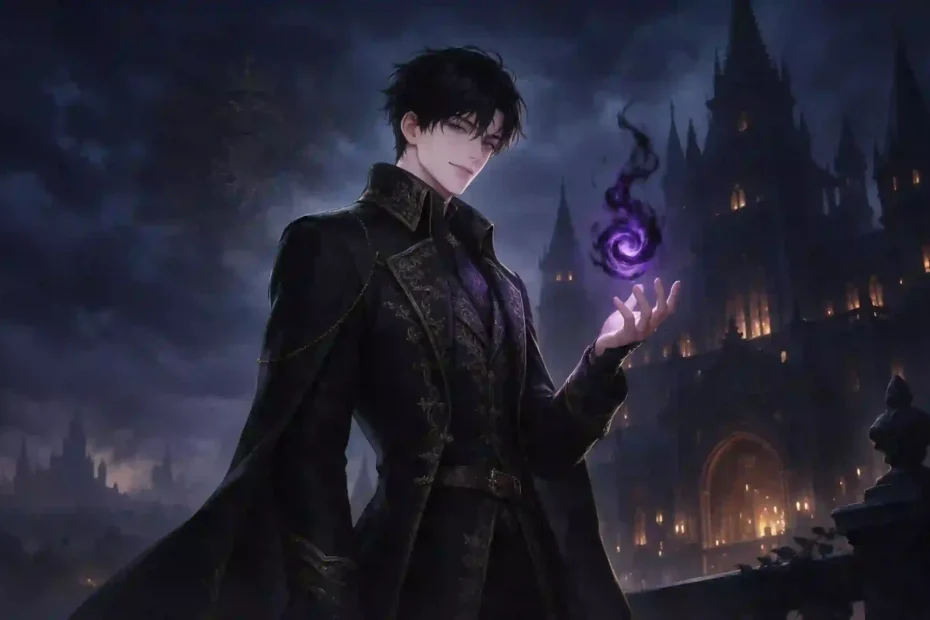
A hero dies after fighting on the losing side of a war, then wakes inside the body of a rich young man everyone despises. That sharp reversal gives I Became the Genius Bastard of a Noble Dark Clan its hook, but the real challenge is bigger than learning dark magic: the new Christian must turn foreknowledge into a chance to survive. This guide explains the premise, cast, world, themes, novel, and webtoon without spoiling major later turns.
Quick answer: It is a Korean fantasy action story about a capable former hero who is reborn as Christian van Baren Kazar, a disgraced heir tied to a powerful dark-magic family. He uses his past-life knowledge, unusual talent, and new identity to change a disastrous future.
At a glance: story facts and format
| Detail | What readers should know |
|---|---|
| English title | I Became the Genius Bastard of a Noble Dark Clan |
| Korean title | 암흑명가 천재 망나니가 되었다 |
| Original format | Korean web novel |
| Adapted format | Full-color fantasy webtoon/manhwa |
| Main character | Christian van Baren Kazar, also called Chris in the earlier life |
| Core premise | A failed hero wakes in the body of a notorious noble-family wastrel |
| Main genres | Fantasy, action, adventure, supernatural, reincarnation, progression |
| Original author credit | Yoo In (유인), on the novel listing |
| Webtoon credits | Salbyeol, Glee, and Yoo In are listed on the official Korean platform pages |
| Novel status | The KakaoPage listing labels the novel complete |
| Webtoon status | The KakaoWebtoon episode listing showed episode 75 dated October 19, 2026, when checked on October 23, 2026 |
| Spoiler level here | Premise and early setup; no late-story revelations |
The episode count and release status can change. Check the official platform listing for the latest schedule, regional edition, and access terms. The table describes the series, not an endorsement of unofficial reading sites.
What is the story about?
The story opens after the world has fallen. Chris has spent his life working with a hero’s party, pushing through dangerous battles and believing that victory might bring him a better future. Instead, the struggle ends in defeat and death. His last wish is plain: if he gets another life, he hopes to be born into a wealthy family.
He wakes as Christian van Baren Kazar, a young noble connected to the Magic Empire’s influential dark-magic clan. The wish seems granted in the most literal way: Christian has money, status, and a grand home. Yet the new body comes with a damaged reputation. People know Christian as a spoiled troublemaker, not as a promising heir.
The premise of I Became the Genius Bastard of a Noble Dark Clan turns on the gap between what others see and what the protagonist knows. Chris remembers the cost of failure. Christian’s name and past create immediate suspicion, while the new occupant brings experience and an exceptional ability to learn. He cannot simply announce who he is or ask the household to trust him. He must prove, through choices and results, that the old pattern can change.
The danger also reaches beyond family politics. The story’s world is shaped by hostile powers, competing forms of magic, and a looming catastrophe. Surviving a few awkward conversations will not be enough. Christian needs strength, allies, information, and influence before the next disaster arrives.
Who is Christian van Baren Kazar?
Christian is the central character, but the story gives him two identities to manage. Before reincarnation, Chris was a talented and practical survivor who joined the hero’s party and helped in its efforts. In the new life, he inhabits a young noble whose reputation has already been built by selfish and reckless behavior.
That split creates the series’ key character problem. The mind behind Christian’s actions may have changed, but the people around him still remember the old Christian. They judge his words against years of conduct. Even a sincere promise can sound like a trick when it comes from someone who has repeatedly disappointed them.
Chris also has a distinctly pragmatic streak. He wanted a comfortable life and does not pretend that every decision comes from pure self-sacrifice. That desire gives his plans a wry edge, especially when the world keeps forcing him into dangerous work. His motives may begin with survival and self-interest, but his past gives him reasons to care about people caught in the same disasters.
The most compelling question is not whether Christian is gifted. The plot establishes that quickly. It is whether talent and memory can make him wiser than the person whose life he has inherited. Each relationship tests whether he can earn trust instead of demanding it.
What does “bastard” mean in the title?
The title uses “bastard” as a harsh label for Christian’s social standing and reputation, not as a statement that readers should take at face value about his character. In fantasy fiction, the word can signal illegitimacy, a disputed place in a family, or a person treated as an unwanted embarrassment. Here, the official premise emphasizes that Christian is infamous as a good-for-nothing member of an elite dark-magic household.
The insult matters because it establishes the height of the climb. Christian does not begin as a respected prodigy whose talent everyone celebrates. He starts with a name that makes people expect failure. The story can then build tension from the mismatch between the family’s assumptions and what he actually does.
It is also a useful reminder that titles often compress a character arc into a provocative phrase. The series is not simply a tale about a “bad” noble becoming powerful. It is about reputation, identity, and the difficult work of changing how other people interpret your actions.
How does reincarnation shape the plot?
Reincarnation gives Christian an advantage, but it does not hand him a complete solution. He carries experience from a previous life and knows how the broad conflict ended. That knowledge helps him recognize risks earlier than the people around him, yet memory is not the same as control.
He has to work through several limits:
- He now lives in a different body with a different social history.
- His old allies and enemies may not appear in the same way or at the same time.
- Other people make decisions of their own; they are not pieces on a board.
- Knowledge of a coming danger does not automatically provide the strength to stop it.
- The more he changes events, the less reliable a remembered future may become.
This makes the story more than a simple “I know the plot, so I win” fantasy. Chris’s prior life provides clues, while the present forces him to improvise. Readers get the satisfaction of watching him use information cleverly, but his plans still depend on training, judgment, and relationships.
In I Became the Genius Bastard of a Noble Dark Clan, the second chance works best as pressure rather than a gift. Christian knows what a ruined future looks like. That makes his choices urgent, but it also raises the cost of being wrong again.
What makes the dark-magic clan important?
The clan is more than a wealthy backdrop in I Became the Genius Bastard of a Noble Dark Clan. It places Christian inside a powerful institution with its own rules, history, and expectations. Family status affects access to resources, training, protection, and political influence. It can open doors, but it can also make every mistake public.
The dark-magic identity creates an especially useful contrast. Chris’s previous life put him on the side that fought against the Magic Empire. Now he must live within the society he once opposed. That change challenges the easy division between heroic light and wicked darkness. The label attached to a power or faction does not tell readers everything about its people or motives.
The clan setting also provides a natural engine for character conflict. Relatives and household figures have reasons to remember Christian’s old behavior. They may test him, doubt him, compete with him, or watch for signs that his improvement is temporary. His rise therefore depends on more than defeating opponents in combat.
The best way to read the family plot is to track what Christian’s actions cost him. A display of strength might earn respect from one person and create fear in another. A strategic alliance could solve an urgent problem while giving a rival leverage. The household rewards ability, but it does not erase history.
The world and its competing powers
The political conflict gives I Became the Genius Bastard of a Noble Dark Clan a scale beyond one household. The setting places large political forces in conflict. The Magic Empire and the opposing Union or Dominion are presented as rival sides with different traditions and forms of power. That backdrop widens the story beyond a single family: the future Christian remembers grew out of a system-wide struggle, not one personal feud.
I Became the Genius Bastard of a Noble Dark Clan uses several fantasy power concepts, including mana, aura, dark magic, and forces linked to higher beings. These terms help distinguish training paths and factions, but readers do not need to memorize a glossary before starting. The story introduces its systems through action, explanation, and the choices characters make.
A practical way to understand the world is to ask three questions when a new power appears:
- Who can use it? This connects the ability to a person, school, family, or faction.
- What does it cost or demand? Training, risk, physical limits, or allegiance may matter.
- What does it change in the conflict? A power matters to the plot when it alters options, not just when it looks impressive.
The political map and supernatural stakes work together. A battle may be personal on the page while serving a broader rivalry in the background. Christian’s knowledge helps him see those connections, but the reader can also follow the clues without treating every term as technical lore.
What are the central themes?
Reputation versus reality
Christian enters a life where everyone already has a story about him. The plot asks whether people can revise that story when behavior changes. It also acknowledges that a single good deed does not erase years of harm. Trust builds through a pattern, not a speech.
A second chance and personal responsibility
A new life gives Chris room to act differently, but it does not make him innocent of the consequences attached to Christian’s body and name. He must decide how to handle the benefits of his new position and the damage caused before he arrived.
Talent needs discipline
The protagonist’s unusual learning ability is a major draw. Yet raw potential alone would make the story feel weightless. Training, patience, timing, and judgment turn talent into progress. That combination is familiar to progression fantasy readers, while the family and political context gives each improvement a wider purpose.
The ethics of changing the future
Knowing a tragedy is coming creates a moral problem: who should be warned, how much truth should Christian share, and what risks can he ask other people to take? The answer is rarely simple because his interventions may change the very future he remembers.
Light and darkness are not simple labels
The setting’s opposing powers invite readers to question the moral shorthand of its factions. A character’s allegiance, magic type, or public reputation may explain how others see them, but it does not settle whether they are right or wrong.
Why readers may enjoy the series
The title draws attention with its reversal: a former hero wakes as the villainous-looking heir of a dark clan. The story then layers several familiar pleasures around that hook. Readers who like reincarnation fantasy can follow a protagonist using prior knowledge; progression-fantasy readers can watch him develop skill; action fans get confrontations tied to escalating stakes.
The series also offers a steady contrast between private intent and public judgment. Christian might understand why a choice is necessary, but the people watching him have only his visible behavior to go on. That creates social tension between major battles and gives the relationships room to matter.
The webtoon format adds another reason to try it. A scroll-based comic can present spell effects, expressions, costume details, and dramatic reveals in a more immediate visual sequence than prose. The novel, by contrast, gives more room for internal thought and explanation. Readers who enjoy both can compare how the same character decisions feel in each form.
The premise is likely to suit readers who enjoy:
- Reincarnated or second-life protagonists.
- A once-disgraced character rebuilding credibility.
- Magic systems and fantasy faction conflicts.
- A gifted lead who still needs to plan and train.
- Action mixed with family and political tension.
- Stories where foreknowledge changes, rather than solves, the future.
It may be less appealing to readers looking for a realistic contemporary drama, a romance-first story, or a completely nonviolent fantasy. Its center of gravity is action, fantasy progression, and changing a dangerous timeline.
Novel versus webtoon: which version should you choose?
The novel and comic editions of I Became the Genius Bastard of a Noble Dark Clan tell the same core premise in different ways. The novel centers prose narration, internal thought, and the detail of Christian’s planning. The webtoon uses illustrated scenes, pacing, panel composition, and color to make action and character reactions visible at a glance.
| Feature | Web novel | Webtoon/manhwa |
|---|---|---|
| Best for | Readers who enjoy longer internal narration and prose detail | Readers who prefer visual storytelling and a vertical-scroll format |
| Character insight | The text can stay close to Christian’s thoughts | Expression, framing, and scene design carry much of the emotion |
| Action | Described through narration and movement | Shown through panels, color, and visual impact |
| Reading rhythm | Often easy to pause between sections | Episode breaks and cliffhangers shape the pace |
| Story status | The KakaoPage listing labels the novel complete | Check the current episode page for the latest release status |
| Suggested starting point | Begin at the opening if you want the full setup | Start at episode one; avoid jumping ahead based on chapter-number assumptions |
The adaptation may condense or rearrange details to fit its episode structure. Do not assume that one webtoon episode equals a fixed number of novel chapters. If a scene feels different, the format may be emphasizing a different part of the experience rather than contradicting the source.
For a first encounter, choose the format you are most likely to continue. Pick the webtoon if art and quick visual storytelling help you stay engaged. Pick the novel if you want a fuller view of the narrator’s reasoning. Reading both can be rewarding, but it is not required to understand the main story.
Is the webtoon complete, and where can readers start?
Completion status changes over time and can differ by region or platform. At the time this page was checked, the official KakaoWebtoon listing displayed episode 75 with a date of October 19, 2026. That is a dated platform snapshot, not a promise about future releases or every translated edition.
The original novel’s KakaoPage listing identifies it as complete. This is useful for readers who prefer a finished long-form story, but a completed Korean novel does not mean that every language edition is complete or available in every country.
To find an authorized edition of I Became the Genius Bastard of a Noble Dark Clan, search the title and its alternate official title in the storefronts you use. Look for the publisher or platform’s own listing, creator credits, release notices, and clear episode or volume information. Availability, pricing, free-reading events, and translation schedules vary by region and can change.
Start with the first episode or first novel installment. The opening establishes the death, the reincarnation, and the social problem Christian inherits. Reading from the beginning also avoids spoilers in episode summaries and recommendation pages.
A spoiler-light reading guide
The early story works through a series of linked questions. Can Christian convince the household that he has changed? How quickly can he turn knowledge into real ability? Which events can he prevent, and which dangers grow when he alters the path he remembers?
Readers can follow the progression without keeping a complicated timeline. Watch for the difference between what Christian knows, what he can prove, and what other characters believe. Those three things often move at different speeds. The tension comes from the gap.
Notice how the story uses small choices as character evidence. When Christian makes a promise, the real test is what he does afterward. When someone offers help, consider whether that person trusts him, wants something from him, or simply sees a chance to benefit. This keeps the clan politics clear without requiring a detailed family tree.
It also helps to read the conflicts on two levels. The immediate level may be a duel, training challenge, or dispute inside the household. The broader level may involve a faction, an approaching threat, or the risk of repeating the collapse from Chris’s first life. That double frame explains why a seemingly local event can matter later.
The title I Became the Genius Bastard of a Noble Dark Clan promises a strong power-fantasy angle, and that is part of its appeal. Still, the emotional thread is more than watching an underestimated lead win. It is about whether success can repair a damaged name and whether the person behind that name can become someone others choose to trust.
Common search terms and alternate title phrases
Readers may find the series under slightly different English wording. Search platforms and fan catalogs sometimes translate Korean titles in different ways, so a phrase that looks unfamiliar may point to the same work. The official Korean title is 암흑명가 천재 망나니가 되었다.
Related search phrases include:
- Genius of the Dark Magus Family.
- The Unorthodox Genius of the House of Darkness.
- Dark magic clan reincarnation manhwa.
- Noble family fantasy webtoon.
- Reincarnated hero becomes a dark clan heir.
- Christian van Baren Kazar fantasy story.
Use alternate titles to identify the series, not as proof that every similarly named listing is official. Check the title art, creator credits, original platform, and synopsis before assuming two editions are identical. Official names can differ between translated editions, and unofficial catalog labels may not match the publisher’s wording.
Frequently asked questions
1. What is I Became the Genius Bastard of a Noble Dark Clan about?
It follows a former hero who dies after a failed war and wakes as Christian van Baren Kazar, a disgraced young noble in a powerful dark-magic family. He uses his experience and talent to rebuild his position and change a doomed future.
2. Is it a manhwa or a web novel?
It exists in both formats. The Korean web novel is the source story, and a full-color webtoon adaptation presents the premise visually. Start with either version based on whether you prefer prose or illustrated episodes.
3. Who wrote the original novel?
The KakaoPage novel listing credits Yoo In (유인). The Korean platform listings for the webtoon include Salbyeol, Glee, and Yoo In. Check the edition’s own credit panel for the exact roles attached to that release.
4. Is the novel finished?
KakaoPage labels the Korean novel complete. That status applies to the listed source edition; it does not guarantee that every translated edition, print release, or regional storefront has finished publishing.
5. Is the webtoon finished?
The webtoon’s release status can change. The official KakaoWebtoon page displayed episode 75 dated October 19, 2026, when checked on October 23, 2026. Consult the current official listing for updates rather than relying on a static chapter count.
6. Is this story suitable for readers new to fantasy manhwa?
Yes, if they enjoy action, magic, reincarnation, and a protagonist who grows stronger over time. The story introduces its setting through the plot, so readers do not need prior knowledge of Korean fantasy terms. Readers who avoid battle-focused stories may prefer a quieter series.
Final thoughts: should you give it a try?
I Became the Genius Bastard of a Noble Dark Clan brings together an instantly readable hook and a useful character question: can someone change a future when the world still remembers the person he used to be? Its answer unfolds through training, tactical choices, family pressure, and the difficult work of earning trust. The result blends fantasy action with a steady story of reinvention.
If the idea of a failed hero rebuilding his life inside the household he once fought against sounds exciting, begin with the opening episode or first novel installment. Give the early chapters time to establish Christian’s reputation and the rules of his new world. Then decide whether you want to follow the visual adaptation, the completed Korean novel, or both—and share which part of his second chance you find most compelling.