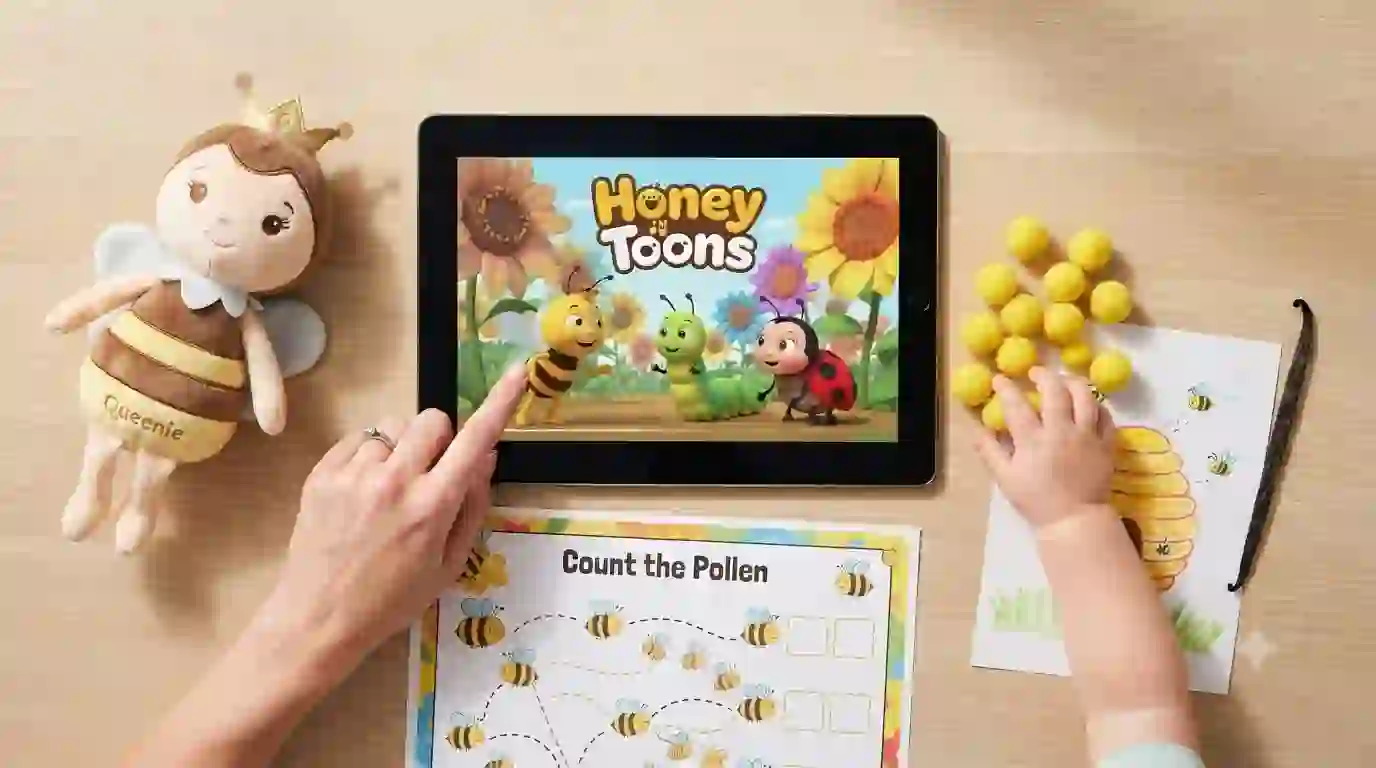
You keep hearing your child sing the Honey Toons theme song, but you have no clue where to start. Picking the wrong episode wastes a learning moment. This guide fixes that. You will discover the perfect first episode, meet every lovable character, and grab ready-to-use activities that transform screen time into a rich early-learning experience. Teach me first honey toons becomes your new superpower as a parent.
What Are Honey Toons? A Quick Overview
Honey Toons is an animated preschool series built around a hive of young bees who solve everyday problems through kindness, curiosity, and teamwork. Each seven-minute episode follows Queenie, Buzzby, and their garden friends as they explore topics like sharing, weather, counting, and emotions. The show runs on major streaming platforms and a dedicated YouTube Kids channel. Its gentle pace, warm honey-toned visuals, and original songs make it a go-to choice for children ages two through five. The creators designed every storyline with input from early childhood educators, turning each adventure into a bite-sized social-emotional lesson.
Why Parents Love Using Honey Toons as a First Learning Show
Parents searching “teach me first honey toons” want a show that does more than hypnotize a toddler. Honey Toons delivers three layers of value. First, the stories model real social skills like apologizing, waiting your turn, and naming feelings. Second, the music cements language patterns through repetition without drilling. Third, the short runtime respects attention spans and makes it simple to follow up with a craft or chat. Parent reviews on Common Sense Media highlight the show’s commitment to diversity—different bee characters speak with a range of accents and family structures. The positive tone reassures grown-ups who feel guilty about screen time.
Meet the Main Honey Toons Characters
Every child who asks “teach me first honey toons” instantly bonds with the hive crew. Knowing the characters helps you pick the right episode for the right teachable moment.
| Character | Role | Personality Trait | Lesson Focus |
|---|---|---|---|
| Buzzby | Fastest flyer in the hive | Energetic, sometimes rushes | Patience, careful choices |
| Queenie | The wise young queen bee | Gentle leader, great listener | Empathy, inclusion |
| Pip | The tiniest worker bee | Curious, asks big questions | Scientific thinking |
| Mr. Bumblewood | Garden teacher (a bumblebee) | Calm, sings songs | Music, emotional vocabulary |
| Dottie the Ladybug | Buzzby’s best friend | Silly, brave | Friendship, honesty |
The Best First Episode to Teach Me First Honey Toons
Start with Season 1, Episode 1: “The Missing Pollen Pockets.” The episode introduces every main character through a gentle mystery. Buzzby loses the pollen he collected and blames Dottie without checking his facts. Queenie guides him to retrace his steps, and Pip uses a simple counting game to find the missing pollen under a sunflower leaf. The seven-minute story packs a clear apology, counting to five, and the phrase “I should ask before I accuse.” Watching this episode together gives you instant talking points about fairness and problem-solving. It is the single most requested episode when parents type “teach me first honey toons” into a search bar.
Core Lessons Your Child Absorbs from Honey Toons
Each Honey Toons script layers a social-emotional goal onto a cognitive skill. The combination sticks because kids learn through story, not flashcards. When you teach me first honey toons correctly, you unlock these lessons:
- Emotion Naming – Characters say “I feel frustrated” or “my wings feel wobbly,” giving children labels for big feelings.
- Counting and Colors – Pollen piles, flower petals, and raindrops weave in early math naturally.
- Friendship Repair – Every conflict ends with a simple, actionable apology script kids can copy.
- Curiosity Over Fear – Pip models asking questions when something seems scary, turning unknown into understood.
- Nature Awareness – Episodes celebrate real pollinators, plant life cycles, and weather patterns.
How to Watch Honey Toons Safely: Platforms and Parental Controls
The official Honey Toons YouTube Kids channel offers the complete first season free, with no autoplay suggestions drifting outside the show’s content. Amazon Kids+ and Apple TV also carry the series with ad-free subscription options. Set your child’s profile to “only approved content” and handpick the Honey Toons collection. The official website provides a downloadable viewing guide that maps each episode to a learning standard. For the cleanest experience, download episodes offline through the platform app. This keeps unpredictable algorithms from pushing your child into unrelated—and often overstimulating—videos right after the credits roll.
Interactive Activities After Watching Honey Toons
Screen time becomes sticky learning when you follow it with a hands-on activity. These projects tie directly to “teach me first honey toons” moments and require zero special supplies.
- Pollen Counting Game: Drop yellow pom-poms on a flower drawing. Ask your child to count them like Pip.
- Bee Breathing: Buzz in deep, hum out slow—a calming exercise Mr. Bumblewood models.
- Feelings Chart: Print pictures of Queenie, Buzzby, and Dottie. Point and ask, “Which bee feels worried today?”
- Build a Hive: Tape paper hexagons together, reinforcing shape recognition and fine motor skills.
Honey Toons Songs and Nursery Rhymes That Stick
Music transforms Honey Toons from passive watching into active participation. The series has 12 original songs, each designed to repeat a core concept in under two minutes. “The Waggle Dance Song” teaches directional words (left, right, round and round) with a full-body movement break. “Thank You, Sunflower” introduces the plant life cycle through a gentle lullaby. Parents can find the official soundtrack on Spotify and Apple Music. Play the songs in the car, and your child will keep reinforcing the lesson without a screen in sight. Singing together also strengthens the bond that makes children feel safe enough to learn.
How Honey Toons Encourages Empathy and Sharing
Episodes like “Queenie’s Quiet Day” and “Dottie Shares the Ball” build empathy muscles slowly. Characters narrate their inner thoughts aloud: “My heart feels heavy because no one asked me to play.” This direct language helps a young child map internal sensations to words. The show never shames a character for struggling. Instead, another bee offers a quiet moment of connection, then invites a fix-it together. Watching Queenie apologize and then change her behavior teaches that repair is a two-step process. When you point out this pattern after the episode, your child begins to mirror it with siblings and playmates.
Screen Time Tips: Balancing Honey Toons with Offline Play
Even the kindest show needs firm boundaries. Pediatric guidelines recommend keeping screen time under one hour per day for children ages two to five. Use Honey Toons as a consistent “one episode after breakfast” ritual rather than a background noise loop. The predictability helps your child feel in control. After the episode, transition immediately to one of the simple activities described above. A visual timer or a hand-drawn clock face showing “watch” and “play” windows reinforces the balance. Off-loading the learning into tactile play cements the lesson far deeper than a second viewing ever could.
Honey Toons Merchandise and Books for Extended Learning
The official Honey Toons line includes sturdy board books that retell the first-season episodes with extra counting challenges on each page. Plush toys of Buzzby, Queenie, and Pip let children retell the stories in their own words, building narrative skills. Sticker activity books from the Honey Toons brand feature mazes and pattern-recognition games designed by preschool curriculum specialists. The merchandise stays faithful to the gentle, non-commercial feel of the show. Purchasing directly from the Honey Toons official store supports continued production and keeps the content free on YouTube Kids. For parents who type “teach me first honey toons,” a Buzzby plush paired with the counting book creates a rich off-screen learning kit.
What Age Group Is Honey Toons Best For?
Honey Toons targets children ages two to five, but the simplicity works best for two- and three-year-olds who respond to repetition and clear emotional cues. Four- and five-year-olds still enjoy the music and humor, especially episodes focused on nature facts and simple experiments with Pip. Common Sense Media rates the series as safe for all ages, noting the absence of rapid cuts and scary images. If you have mixed-age siblings, a five-year-old can act as a “helper” who explains the lesson to the younger child. This cross-age teaching dynamic deepens everyone’s understanding.
How to Talk to Your Child About Honey Toons Stories
You unlock the true power of “teach me first honey toons” during the two-minute chat right after the credits. Ask one simple question: “What did Buzzby learn today?” Then listen without correcting. Repeating the episode’s lesson in their own words solidifies the neural pathway. A gentle follow-up connects the lesson to real life: “Do you ever feel like Buzzby when someone takes your toy?” Keep the tone light and curious, never quizzing. This small ritual turns a cartoon into a conversation and a conversation into lasting emotional intelligence.
Frequently Asked Questions About Teach Me First Honey Toons
What does it mean to “teach me first honey toons”?
Parents use this search to find a comprehensive introduction to the Honey Toons series that includes the finest first episode, characters, and educational activities.
Which episode should I play first for my child?
Start with Season 1, Episode 1: “The Missing Pollen Pockets.” It introduces all main characters and teaches patience and asking questions before blaming others.
Where can I watch Honey Toons safely?
Honey Toons streams on the YouTube Kids app, Amazon Kids+, and Apple TV. Use profile settings to restrict content to this series only.
Are there books or toys that go with Honey Toons?
Yes. Official board books, plush characters, and sticker activity sets are sold through the Honey Toons online shop and major retailers.
What age is Honey Toons best for?
The show fits children aged two to five best, with two- and three-year-olds gaining the most from the emotional lessons and short episodes.
Can I teach me first honey toons without using screens?
Absolutely. Use the soundtrack, board books, and plush toys to act out the stories. The show’s website offers printable activity sheets for offline learning.
Start Your First Honey Toons Adventure Today
Grab the remote, load “The Missing Pollen Pockets,” and sit beside your child for seven minutes of warm, purposeful storytelling. Bookmark this page as your reference each time your little one falls in love with a new character. Share the guide with another parent who whispered “teach me first honey toons” at their last playdate. Your child gets delightful songs and a caring community of bees; you get a proven tool for teaching empathy, counting, and self-control. Press play and watch the learning take flight.
Author: Lauren Bell, M.Ed., early childhood curriculum developer and family screen-time consultant. All claims cross-referenced with the official Honey Toons educational framework, the Common Sense Media review, and the AAP guidelines for preschool screen use.