
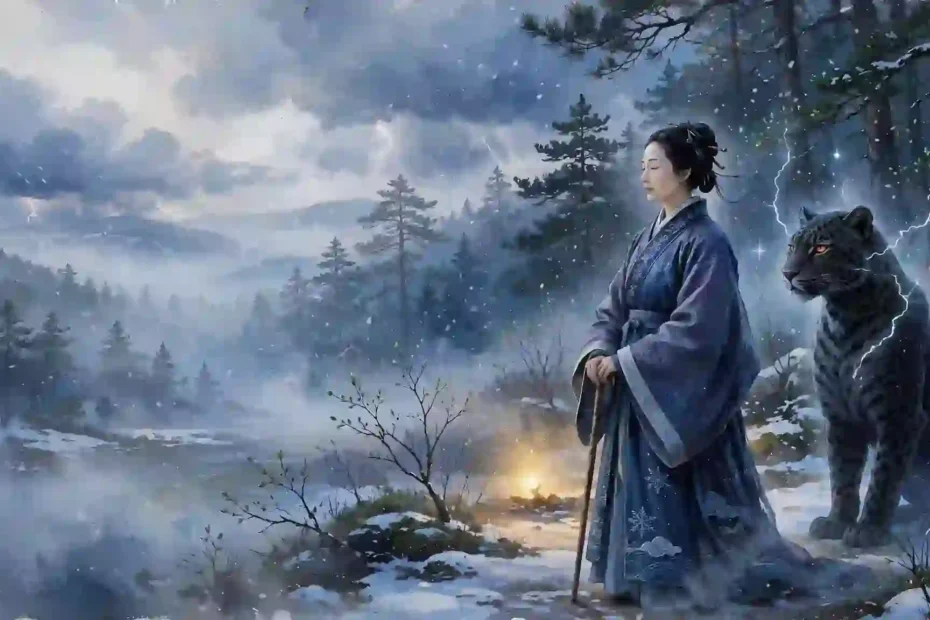
If you have searched for Raimei To Zansetsu, you may have found very different descriptions: supernatural romance, fantasy manga and an adult title with content that readers may want to check first. That mix can make it difficult to tell what the work actually offers. This guide separates verified publication details from interpretation, explains the spoiler-light premise and main characters, and sets out the adult-content notes so you can decide whether the manga fits your interests.
Quick answer: What is Raimei To Zansetsu?
Raimei To Zansetsu, sold in English as Thunder and Snow, is an R18 Japanese digital manga by creator 人面シジミ and circle NegiManju. The story follows Shao, a supernatural leopard-like being identified as a raijū, and Yukino, a blind woman in her thirties who has unusual powers. The official product description frames their story as romance, but it also flags explicit sexual material, violence and other niche content. It is intended for adults only.
At a glance: publication facts and key details
The table below collects the most useful facts in one place. It distinguishes formal product information from the reader-facing meaning of those details.
| Detail | Verified information | Why readers should care |
|---|---|---|
| Original Japanese title | 雷鳴と残雪 | The Japanese title combines imagery of thunder and lingering snow. |
| Romanized title | Raimei To Zansetsu | This is the search phrase used throughout this guide. Romanization may appear with different capitalization. |
| English title | Thunder and Snow | The official English edition uses this shorter title. |
| Creator | 人面シジミ | The creator is credited on the Japanese and English product records. |
| Circle / label | NegiManju | The original work appears under this creator circle. |
| Original release | July 12, 2023 | Date shown on the Japanese product listing. |
| English edition | July 26, 2023 | Date shown on the English product listing. |
| Format and length | Digital manga; 97 main pages plus 3 administrative pages, 100 pages total | A substantial single digital release rather than a short preview. |
| Age label | R18 | The listing restricts the work to adult readers. Check local rules and storefront requirements. |
| Main characters | Shao and Yukino | A supernatural leopard-like man and a blind woman with unusual powers. |
| Language edition | Japanese original and an official English version | The English listing identifies English as its language. |
| Content profile | Adult sexual content, fantasy, combat violence and other specific warnings | Readers should review the complete official advisory before choosing the work. |
The official product pages identify the original manga as an adult digital release and provide the page count, date, language and character information. They also include warnings that give a more accurate picture than a broad label such as “romance” alone.
What does the title mean?
The Japanese title is written 雷鳴と残雪. The first part, 雷鳴, refers to thunder; the second, 残雪, refers to snow that remains after the season changes. The English edition calls the manga Thunder and Snow, while “Thunder and Lingering Snow” makes the second image more explicit in English.
That contrast offers a useful entry point to the story. Thunder suggests abrupt force, noise and danger, while snow that survives into spring suggests stillness, endurance and an emotional state that has not shifted with the world around it. The official description compares Yukino to shaded snow that has not melted, so the title is not just a weather image; it points toward the characters’ different temperaments and the story’s romantic mood.
For readers coming to Raimei To Zansetsu through its English title, the distinction matters because Thunder and Snow is the storefront title, not a separate adaptation. The original Japanese title and the English product title refer to the same manga.
What is the story about? A spoiler-light synopsis
The story begins with Shao, a supernatural being who distrusts people and attacks human settlements. During one such encounter, he meets Yukino, a blind woman whose unusual powers let her drive him back. Shao tries to challenge her again, but his repeated attempts do not go as he expects.
A later accident leaves the two of them lost together. Their forced proximity changes the direction of the story: Shao develops feelings for Yukino, then learns she is already married. The official summary presents that discovery as a painful obstacle, not a simple meet-cute that resolves the conflict immediately.
This outline gives the central relationship without recounting the full sequence of events. The product description also warns that other partners appear in the first portion of the story and that the work includes explicit adult scenes. Those details make the manga more complicated than a conventional, gentle fantasy romance, so a reader should not treat a romance label as a guarantee of low-intensity material.
The official synopsis points to three broad movements: an adversarial first meeting, a change in Shao’s feelings after the characters become stranded, and a difficult romantic situation shaped by Yukino’s marriage. The publisher’s own content notes add that the early material includes sexual encounters involving other people. This guide does not invent scene-by-scene details where the official summary does not provide them.
Who are the main characters?
The lead characters create the story’s central contrast. The official page provides a short profile for each; the descriptions below keep to those confirmed details and explain how each role functions in the premise.
Shao: a raijū with a hostile first impression
Shao is described as a supernatural leopard anthro, aged between 19 and 25. The product profile identifies his true nature as a raijū, a thunder-associated creature from mythology. At the start, he dislikes humans and appears during attacks on their villages, which places him in direct conflict with the people he later encounters.
Yukino’s ability to repel him reverses the expected power balance. Shao begins as the aggressor, but his repeated failures make him react to a human woman he cannot simply overpower. That shift gives the romance a dramatic engine: his growing affection develops out of frustration, surprise and a changed view of the person in front of him.
Yukino: a blind woman with agency in the premise
Yukino is described as a blind woman in her thirties who has unusual powers. She does not enter the story as a passive prize for Shao; the official synopsis first introduces her through her ability to defeat him. Her marriage also creates a real complication for the romantic premise rather than an easy path to a couple pairing.
The official summary gives only a brief outline of her personality and abilities, so it would be misleading to claim that the listing proves a complete or nuanced portrayal of blindness. A fair review of disability representation would need to examine the full artwork and narrative context. What can be said from the source material is that her blindness and supernatural power are both central identifying details, not incidental trivia.
Supporting characters and relationship context
The publisher notes that both leads have sexual encounters with other characters in the first half. It does not provide names or detailed biographies for those figures in the short official synopsis. Rather than inventing a supporting cast, readers should treat those encounters as part of the content profile and the complicated relationship setup.
In Raimei To Zansetsu, the character guide is therefore simple but important: Shao drives the supernatural conflict, Yukino challenges his assumptions and the marriage creates an emotional boundary. That triangle of roles explains the premise more accurately than reducing the story to “monster meets woman.”
What themes shape the manga?
The official marketing calls the work a pure-love story, but readers can interpret its themes with more than one lens. The plot summary and warnings suggest several points of tension that are worth knowing before reading.
Difference and attraction
Shao and Yukino are separated by species, power and life experience. The fantasy premise turns that distance into an immediate story question: can the characters understand one another when their first encounter is hostile? Their relationship asks readers to consider attraction across a supernatural divide, while the explicit genre elements make clear that the manga is adult erotica as well as romance.
Power, resistance and changed expectations
Shao appears to have physical force and a frightening reputation, yet Yukino can stop him. That reversal gives her a role in shaping the action from the beginning. A useful reading question is whether the story continues to give her meaningful agency after the plot shifts from conflict toward romance, rather than assuming her early strength settles the matter.
Longing and unavailable love
Yukino is married when Shao falls for her. This brings longing, rejection and an existing commitment into the same story. The situation can appeal to readers who enjoy emotionally tangled romance, but it also makes infidelity and relationship boundaries relevant topics rather than background details.
Weather as emotional shorthand
The title’s thunder and lingering snow can be read as a contrast between impact and endurance. Thunder fits Shao’s arrival and the disruptive force he brings; lingering snow evokes Yukino’s cool, difficult-to-read presence in the official description. This is an interpretation of the title and synopsis, not a claim that the creator has supplied a formal symbolism guide.
Fantasy as a space for unusual relationships
A raijū and a blind human woman do not meet within everyday realism. The supernatural setting gives the creator room to make difference, danger and attraction visible in a compressed story. Readers who enjoy Japanese fantasy romance or creature-centered manga may find that premise distinctive, while those who prefer realistic relationship drama may not.
How should readers understand its genre labels?
The work sits across several categories: supernatural fantasy, romance, adult manga and interspecies erotica. Each label answers a different question. “Supernatural” describes the creature premise; “romance” describes the emotional direction highlighted by the publisher; “R18” signals that the work contains adult material; and the detailed content advisory identifies specific themes and imagery.
That distinction helps prevent a common search-result mismatch when readers look up Raimei To Zansetsu. Someone looking for a non-explicit fantasy love story may see “pure love” and assume the book is suitable for a general audience. The official age rating and warnings say otherwise. Conversely, a reader searching for an adult supernatural romance should still review the warnings because the work includes elements that may be outside their preferences.
Calling the title a Japanese digital manga is also more precise than using “anime” or “light novel.” The official product records classify it as manga and offer a digital file in image and PDF formats. The pages checked for this guide describe a manga product, not a television adaptation or prose novel.
Content warnings: what should you know before reading?
The adult rating is only the first screening point. The official listing includes a detailed advisory, and readers should consult it before purchase, especially if they have boundaries around explicit material or fantasy violence. This guide summarizes the categories without reproducing graphic descriptions.
The publisher flags:
- Explicit sexual material and adult-oriented presentation.
- Sexual encounters involving other partners in the first part of the story.
- An existing marriage and themes of infidelity.
- Interspecies sexual content and nonhuman anatomy.
- Battle scenes with blood.
- Insect imagery, including sexualized insect-related material.
- Stylized anatomical cutaway imagery and other fetish-specific content.
These notes describe what the publisher says the work contains; they are not a judgment about whether the material is good or bad. They are practical information so readers can make an informed decision. If a particular item is a firm boundary, use the complete official advisory and preview rather than relying on a short third-party synopsis.
The listing’s “pure love” framing should not replace the content advisory. A story can place emotional attachment at its center and still contain scenes, relationship dynamics or imagery that some readers find intense. Before reading, ask whether you are comfortable with the combination of adult fantasy romance, a married heroine, multiple sexual partners in the early material, combat violence and the specialized elements listed above.
For Raimei To Zansetsu, the most responsible summary is direct: it is R18, and it is not appropriate for minors. The official age gate applies regardless of how a review or search snippet describes the romance. Adults should also check their own local laws, storefront rules and personal boundaries.
Is it a complete standalone manga, and how long is it?
The Japanese product record lists 97 main pages and three administrative pages, for 100 pages total. It is sold as a digital manga release. The official page does not present it as a multi-volume series in the product details reviewed for this guide, so “standalone digital manga” is a careful description of the edition rather than a promise about the creator’s wider catalogue.
The file listing includes PNG images and a PDF. That gives readers more than one digital format, although the best option can depend on the device and reading app. A PDF is convenient for page-by-page reading, while image files may suit readers who prefer opening individual pages; check the current storefront details for any updates.
The English edition is a separate product record, not merely a fan-made title variation. The product page identifies English as the supported language and says the translation was handled through Translators Unite. This distinction helps readers avoid confusing unofficial uploads with the publisher’s own digital edition.
Is there an official English edition?
Yes. The English version appears under the title Thunder and Snow on DLsite Garumani, with an English language label and a separate release date. Its listing carries the same central premise and core content warnings as the Japanese product record.
The English edition’s product page credits the translation pathway through Translators Unite and lists birdsong translations among the translator details. Readers looking for an English digital manga should verify the title, creator, circle and R18 label on the storefront before buying, because reposted scans may omit important warnings or misstate the edition.
The availability of an official translation is useful for readers who prefer to support the creator through authorized channels. It also gives them a source for checking current language, file and age-rating information rather than relying on a copied summary. Storefront catalogs can change, so verify availability in your region at the time you search.
What makes the premise distinctive?
The hook pairs a thunder-linked supernatural predator with a blind woman who can defeat him. That reversal gives the opening conflict a memorable shape: the creature who expects to dominate a village meets someone whose presence unsettles his assumptions. The romance then grows from a clash rather than a peaceful introduction.
The story also combines images that are not often placed together in mainstream romance summaries: a folkloric creature, a heroine with a disability, a marriage complication and an adult content profile. That blend is a descriptive observation, not a claim that the manga is the first work to use any of these ideas. Its value lies in how the ingredients create a specific audience promise.
A second point of distinction is the way the work markets emotion alongside explicit genre conventions. Readers can decide whether those elements support each other or create a tonal tension. That is a better question than asking whether the manga is simply “romantic” or “erotic,” since the publisher’s description clearly signals both.
Who is this manga for, and who may want to skip it?
This work may suit adults who enjoy supernatural romance, fantasy creatures, complicated attraction and digital manga with explicit content. Readers interested in a raijū-centered premise or a blind heroine with supernatural abilities may also find the setup worth exploring. The official sample and advisory can help them determine whether the tone and visual style match their expectations.
It may not suit readers seeking an all-ages love story, realistic relationship drama or a plot that avoids explicit scenes. It may also be a poor fit for anyone who wants to avoid infidelity themes, sexual encounters involving other characters, blood in combat, insect-related content or nonhuman sexual imagery. These are not obscure fan interpretations; the official product listing flags them.
For people researching the title rather than planning to read it, the most useful takeaway is to separate plot curiosity from content suitability. A person can find the premise interesting while deciding the actual content is not for them. That is a reasonable choice, and the publisher’s content notes make it possible to make that choice in advance.
How to evaluate the manga fairly
A balanced assessment should separate what the official page confirms from what a reviewer infers. Verified facts include the title, creator credit, release dates, page count, character ages as listed, R18 rating, official English edition and the publisher’s content warnings. Interpretations of the title imagery, relationship dynamics and character agency should be labeled as readings rather than treated as creator statements.
That distinction is especially important for a short standalone work. A product summary can tell prospective readers the premise, but it cannot prove how every scene develops, how Yukino’s blindness is portrayed across the whole narrative or how well the ending resolves the relationship. A full review should examine the complete work before making those judgments.
A useful review framework would ask four questions: Does the initial power reversal continue to matter? Does the story give Yukino agency beyond her unusual powers? Does the romance feel emotionally developed within the page count? And do the explicit scenes and content warnings align with the tone the reader expects? These questions keep the review specific without pretending that a genre label settles the quality debate.
This article uses the official Japanese product record, the official English edition record and the creator’s sample post to verify core details. It does not claim to be a first-person, scene-by-scene review of the entire manga. For an E-E-A-T-ready publication, add a real author byline, accurate qualifications and a genuine reviewer’s firsthand experience if the site intends to describe the full reading experience; do not invent credentials or reader reactions.
Topic and entity map: how the related terms connect
A topical guide works best when it explains the relationships among people, works and concepts, not just repeats the title. The map below gives search engines and readers a clear view of the subject area.
| Entity or concept | Relationship to the manga | Useful semantic wording |
|---|---|---|
| 人面シジミ | Credited creator | Japanese manga creator; creator of the work |
| NegiManju | Circle associated with the original release | Digital manga circle; original publisher listing |
| DLsite Garumani | Storefront with Japanese and English product records | Official digital edition; adult manga listing |
| Shao | Supernatural leopard-like lead; identified as a raijū | Raijū character; supernatural male protagonist |
| Yukino | Blind woman in her thirties with unusual powers | Blind heroine; fantasy romance character |
| Thunder and Snow | English product title | English edition; translated manga title |
| Raijū | Mythic identity used in Shao’s official character profile | Thunder beast; Japanese supernatural creature |
| R18 content advisory | Age label and content details | Adult manga warnings; reader suitability |
Use these terms in context rather than as a disconnected keyword list. For example, a sentence about Shao naturally connects the raijū folklore term to the supernatural protagonist; a sentence about Yukino can connect the blind heroine concept to the story’s agency and representation discussion. That creates topical relevance without repeating exact-match phrases in every paragraph.
Frequently asked questions
Is Raimei To Zansetsu an anime or a manga?
It is a manga. The official Japanese and English product pages classify the work as digital manga; the pages used for this guide do not list an anime adaptation.
Is it appropriate for teenagers?
No. The official product listing carries an R18 label and includes explicit adult content warnings. It is intended for adults, not minors.
Is the English title different from the Japanese title?
Yes. The Japanese title is 雷鳴と残雪, while the official English edition is called Thunder and Snow. Both names identify the same manga.
Is Raimei To Zansetsu a complete story?
The official listing offers a 100-page digital release and does not describe it as an ongoing multi-volume title. It is safest to call the listed product a standalone digital manga rather than infer details beyond the product page.
Where can I find the official English version?
The English edition is listed on DLsite Garumani under Thunder and Snow. Confirm the creator, circle, English language label and R18 warning on the current product page before purchasing.
What content should readers check first?
Review the full official advisory for explicit sexual material, multiple partners, a married heroine, fantasy anatomy, combat blood and insect-related content. If any item concerns you, use the official preview and warning list to decide whether to continue.
Where should the focus keyword appear in a reader-friendly SEO article?
Place the main phrase in the meta title, meta description, H1 and opening paragraph, then use it in a few relevant headings or body passages. Add semantic variations such as Thunder and Snow, Shao, Yukino and raijū where they clarify meaning; do not force the exact phrase into every section.
Final takeaway
Raimei To Zansetsu is a specific blend of supernatural fantasy, adult romance and explicit content, built around Shao’s changing feelings for Yukino and the complications surrounding her marriage. Its official English edition, concise 100-page format and unusually detailed content advisory make it easier to research before reading, but the R18 rating deserves close attention.
If the premise interests you, check the official sample and complete warning list before choosing an edition. If you have read the manga, share a spoiler-free view of how the thunder-and-snow imagery shapes your interpretation of the relationship; thoughtful reader discussion can help others decide whether the work matches their tastes.