
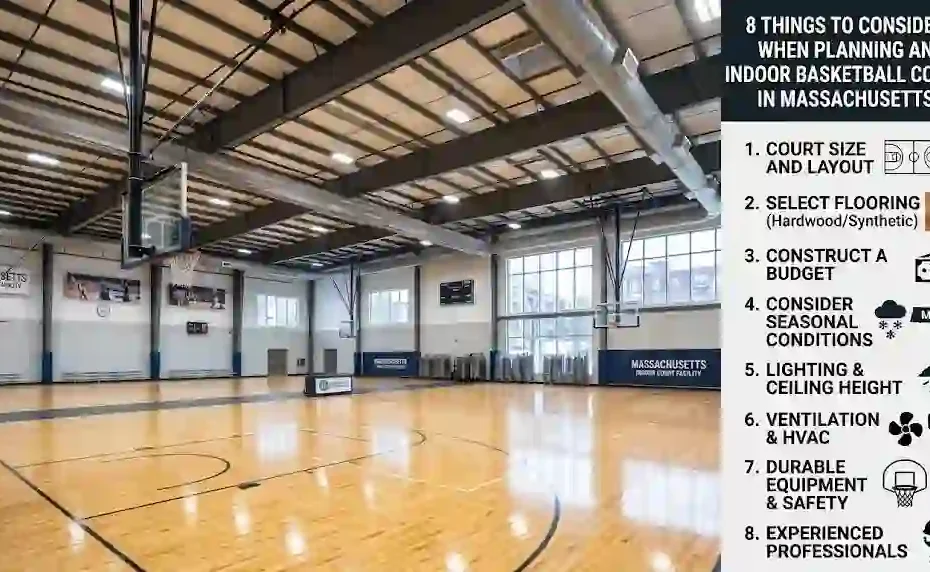
Planning an indoor basketball court in Massachusetts is an excellent way to create a reliable space for year-round training, recreational play, and competitive games. Whether you are a school administrator, sports facility owner, or property owner, careful planning helps ensure your court meets players’ needs while delivering long-term performance.
Massachusetts winters, fluctuating temperatures, and indoor moisture conditions make it especially important to consider flooring, insulation, lighting, and ventilation before construction begins. Here are eight essential factors to help you plan a functional and durable indoor basketball court.
1. Choose the Right Court Size and Layout
Start by identifying how the court will be used. A full-size basketball court is ideal for competitive games, while a half-court layout may be more practical for residential properties, training facilities, or smaller recreation spaces.
Consider the available building dimensions, ceiling height, sidelines, and safety clearance around the playing area. Schools and sports facilities should also account for player movement, spectator seating, and additional training zones.
A well-planned layout ensures players have enough room to practice safely without compromising the building’s functionality.
2. Select Flooring That Supports Performance
Flooring directly affects traction, ball response, shock absorption, and player comfort. Choosing a suitable surface is essential for reducing injury risks and supporting consistent gameplay.
When comparing the best indoor basketball court flooring options, consider hardwood, synthetic sports flooring, and rubber surfaces based on your facility’s requirements.
- Hardwood flooring: Popular for school gyms and competitive basketball because of its traditional playing characteristics.
- Synthetic sports flooring: Offers design flexibility and can provide suitable performance for multipurpose facilities.
- Rubber flooring: Often useful in fitness and training areas where durability and cushioning are priorities.
Evaluate maintenance needs, installation requirements, expected usage, and long-term durability before making a decision.
3. Prepare a Realistic Construction Budget
Your budget should cover more than the playing surface. Building preparation, flooring, equipment, lighting, and installation can all influence the final project cost.
Include expenses for subfloor preparation, basketball hoops, court markings, wall protection, and any necessary electrical or ventilation upgrades. Existing gym renovations may also require removal of damaged flooring or repairs to the underlying structure.
Request a detailed project estimate so you can understand the scope of work and prioritize essential features without overlooking future maintenance expenses.
4. Plan for Massachusetts’ Seasonal Conditions
Although an indoor basketball court is protected from direct snowfall and rain, Massachusetts weather can still affect the building environment. Cold winters, temperature fluctuations, and moisture entering through entrances may influence flooring performance.
Proper insulation, moisture management, and consistent indoor temperature control help protect the playing surface. For new construction, make sure the building envelope and subfloor are suitable for the selected flooring system.
Addressing these considerations early can help prevent avoidable repairs and support reliable year-round use.
5. Get Lighting and Ceiling Height Right
Good lighting helps players track the ball, judge distances, and move confidently across the court. Choose evenly distributed lighting that minimizes glare and harsh shadows, particularly around the baskets.
Ceiling height is equally important. Players need sufficient overhead clearance for jump shots, rebounds, and high passes. Check for beams, hanging fixtures, ventilation equipment, and other obstructions before finalizing the layout.
For schools and commercial facilities, plan lighting around the intended level of play and the building’s energy-efficiency requirements.
6. Prioritize Ventilation and Indoor Comfort
Basketball generates considerable body heat, especially during team practices and tournaments. An effective heating, ventilation, and air conditioning (HVAC) system helps maintain comfortable playing conditions throughout the year.
Massachusetts winters make reliable heating particularly important, while adequate ventilation helps manage humidity and stale air. Work with qualified building professionals to determine appropriate system capacity and airflow.
Comfortable indoor conditions support a better playing experience and help protect flooring materials from environmental fluctuations.
7. Choose Durable Equipment and Safety Features
A well-designed basketball court requires more than flooring and painted lines. Select sturdy hoops, secure mounting systems, appropriate backboards, and equipment suited to the expected level of play.
Additional safety features may include wall padding, protective barriers, accessible entry routes, and adequate clearance around the playing area. Schools and community facilities should also consider accessibility requirements and relevant building codes.
Plan equipment placement carefully to prevent obstructions and create a safe environment for players, coaches, and spectators.
8. Work With Experienced Court Installation Professionals
Professional planning can help coordinate site preparation, flooring selection, equipment placement, and finishing details. Look for a contractor with relevant sports flooring experience, a clear project scope, and an understanding of local building requirements.
If you are searching for an indoor basketball court near me, compare contractors based on project experience, references, installation methods, and after-installation support rather than price alone.
Choosing expert indoor basketball court installation services can help ensure that important details are addressed before construction begins, reducing the risk of costly corrections later.
Plan Your Indoor Basketball Court With Confidence
Building an indoor basketball court in Massachusetts requires thoughtful decisions about space, flooring, budget, climate control, lighting, and safety. By evaluating these eight factors early, you can create a court that supports year-round play and meets your facility’s long-term goals.
Whether you are upgrading a school gym, developing a sports facility, or planning a private court, working with experienced professionals can help turn your vision into a practical, durable playing space. Start by defining your requirements and exploring solutions that fit your building, budget, and intended use.
Keep Reading

How an Instagram Marketing Consultant Helps Brands Build a Stronger Online Presence

Free AI Image Generators: What They Can Really Do for Bloggers, Freelancers and Small Teams

Chicago Cubs vs Milwaukee Brewers: Full Player Stats, Game Recap & Rivalry Breakdown

Gojo Satoru: The Strongest Sorcerer Who Changed Everything (and Nothing)

Vyvymanga Down? Why It Fails, What the Risks Are, and Where to Read Instead