
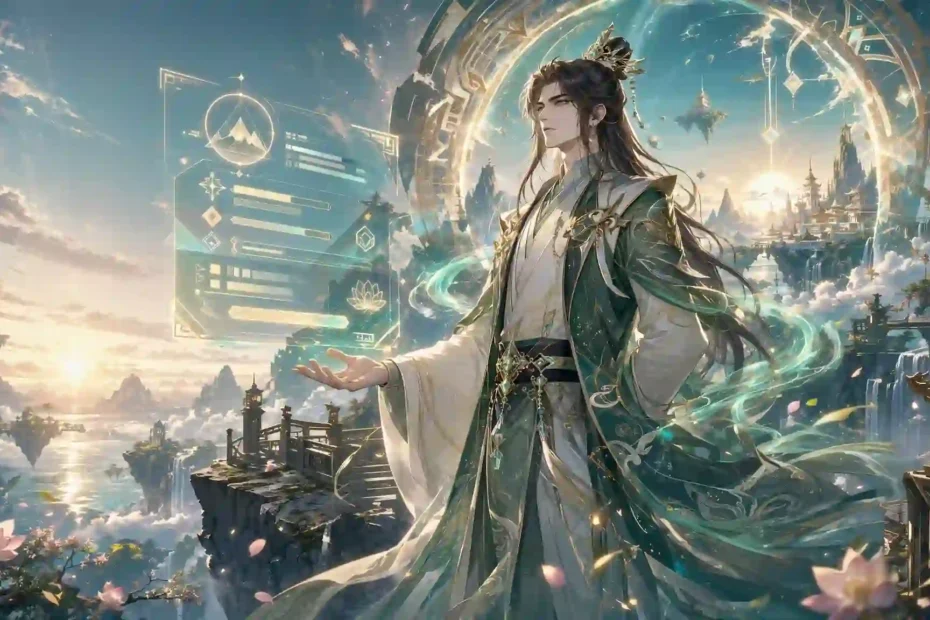
You have finished a hundred cultivation stories where the hero starts weak and grinds upward, so the pattern feels predictable. A Cultivation Master Starts a New Account in Another World flips that pattern on purpose: the strongest man in the room walks away and chooses to be nobody again. The hard part is knowing whether the flip pays off before you spend your evenings on it. This guide gives you the plot, the system, a chapter map and a clear verdict.
What Is A Cultivation Master Starts a New Account in Another World?
It is a Chinese full-color manhua about an unbeatable cultivator who leaves his own realm and enters a different world using a weak second body, a “small account” in gaming terms. Tencent Dongman publishes the original under the Chinese title 独自去修仙, credited to the creator handle 拾部. English readers found it in early 2026 through scanlation groups, and aggregator listings show 22 translated chapters, with the newest one dated June 6, 2026.
The story belongs to two families of fiction at the same time. It is xianxia, the Chinese cultivation genre built on qi, meridians and staged power realms. It is also isekai, the Japanese term for a hero who lands in another world. A Cultivation Master Starts a New Account in Another World merges both, then adds a comedy engine that keeps the tone light.
The premise solves an old problem. Most cultivation stories run out of tension once the hero becomes unkillable. This one keeps the tension by removing the hero’s power on purpose, then handing him the memory of what power feels like.
Quick Facts About A Cultivation Master Starts a New Account in Another World
| Detail | What Readers Get |
|---|---|
| Original title | 独自去修仙, also listed as 修仙大佬异世界开小号 |
| Format | Full-color manhua, vertical scroll in English releases |
| Creator credit | 拾部, per Tencent Dongman |
| Publisher of record | Tencent Dongman |
| Genres | Action, adventure, fantasy, comedy, martial arts |
| English chapters | 22 as of June 2026, ongoing |
| Core hook | A bored immortal opens a weak alt account in a new world |
| Audience rating | Roughly 3.3 to 7.0 out of 10 across aggregator sites |
| Reading time | Under two hours for the released chapters |
| Best matched readers | Cultivation fans tired of power fantasy with no stakes |
The rating spread matters. Review scores on scan and aggregator sites come from tiny sample sizes, often fewer than ten votes, so treat every number as a mood signal rather than a verdict. This series sits in the “fun but not yet proven” zone, which is normal for a title still under thirty chapters.
Why the “New Account” Premise Works So Well
Every gamer understands the smurf account. You take your skill and knowledge into a low-level lobby, and the fun comes from winning with nothing. This series applies that idea to a genre obsessed with rank.
The hero does not lose his memory, his instincts or his understanding of technique. He loses only his cultivation base, his status and his shortcuts. That gap creates three useful story engines at once:
- Comedy, because a grandmaster keeps reacting to weak-world problems like a teacher watching a student fail at basics.
- Suspense, because his body cannot cash the cheques his mind keeps writing.
- Satisfaction, because every small victory proves the person, not the power level.
The premise also fixes the classic isekai flaw. Heroes who arrive with a system, a cheat skill or a goddess gift rarely earn their wins. This hero earns them by rebuilding, and readers feel the effort in their hands.
Who the Cultivation Master Is as a Character
The protagonist reads as a veteran who has nothing left to prove. He does not chase glory in the new world, because he has already held it. He chases novelty, and that makes him unusual in a genre full of ladder climbers.
His voice carries the story. He narrates small mechanical problems with the calm of someone who solved bigger ones centuries ago, and the humour lands because he never tries to be funny. He simply finds weak-world logic absurd.
That distance from status gives him a generous streak. He teaches, patches other people’s broken techniques and treats talent as a repair job rather than a birthright. Watching a former apex cultivator notice ordinary people is the emotional core of A Cultivation Master Starts a New Account in Another World, and it is the part readers quote most.
The Two Worlds, Explained Simply
The story runs on a contrast between a high realm the hero leaves and a lower world where he restarts. Think of it as a library and a small workshop. He keeps the library card in his head and rebuilds the workshop with bare hands.
The old world runs on pure cultivation logic. Power ranks matter, seniority matters, and a single realm gap decides who speaks. The new world runs on different rules, closer to magic systems and game logic, where locals train through structured dungeons and materialised spells.
That rules mismatch creates the best comedy and the best fights. His habits belong to one world; his body belongs to another. When those two systems collide, the story gets its most inventive scenes, including an early sequence where he treats a game-style instance as a training ground.
The Cultivation System in Plain English
Cultivation fiction confuses newcomers because it hides simple ideas behind dense vocabulary. Strip the jargon away and this series runs on four moving parts.
- Qi. Life energy that moves through the body, similar to stamina with a spiritual flavour.
- Meridians. The channels qi travels through. Damage them and power leaks out, which is exactly the hero’s early problem.
- Realms. Staged power levels. A higher realm means faster healing, longer life and stronger techniques.
- Instances. Structured challenges that behave like game dungeons, complete with bosses and rewards.
The early arc treats meridians as plumbing. A blocked pipe kills water pressure, so the hero rebuilds his channels before he chases big techniques. That patient repair work gives the series a grounded feel that pure power fantasy usually skips.
“Quantum” and “materialised magic” appear in the early chapter titles as playful labels. They signal a modern, physics-flavoured way of talking about spiritual energy rather than a serious science lesson. This tone is why A Cultivation Master Starts a New Account in Another World reads lighter than classic wuxia.
Chapter Map: How the Story Opens
The Chinese release titles below are translated closely, so exact English wording on scan sites may differ. Chapter numbering between the original and the English release can also shift by one or two chapters.
| Chapter (Chinese release) | Title in English | What It Delivers |
|---|---|---|
| 1 | Invincibility Is Boring | The hero admits that total strength has killed his joy |
| 2 | Quantum Cultivation | A modern lens on spiritual energy and technique |
| 3 | An Ordinary Person | He enters the new world stripped of status |
| 4 | Mending the Meridians | Repair work begins; the body cannot keep up with the mind |
| 5 | Refining the Chicken Spirit | Comedy beats and a low-stakes first test |
| 6 | Entering the Instance Dungeon | Game-style structure arrives |
| 7 | Chicken Boss | A joke boss becomes a real skill check |
| 8 | Ambushed | The new world shows teeth |
| 9 | Materialised Magic | Local magic rules clash with cultivation habits |
| 12 | Satisfying | A payoff chapter that rewards patient readers |
That opening run tells you the series wants laughs and competence in equal measure. It also shows restraint. Chapter after chapter, the hero solves problems with knowledge rather than overwhelming force, and the story refuses to hand him a shortcut.
If you sample only one section, read chapters 4 through 7. They show the loop this series runs on: broken body, careful repair, invented solution, earned win.
Is A Cultivation Master Starts a New Account in Another World Different From Other Isekai?
Yes, and the difference sits in the power setup. Most transport stories give the hero a gift on arrival. This one gives him a handicap on arrival and a memory of greatness.
| Story Type | What the Hero Gains | What the Hero Loses | Reader Feeling |
|---|---|---|---|
| Classic isekai | A cheat skill or a system | Nothing important | Wish fulfilment |
| Regression stories | Knowledge of the future | Time and trust | Dread and revenge |
| System / LitRPG | Visible stats and quests | Free will, often | Grind satisfaction |
| A Cultivation Master Starts a New Account in Another World | Craft knowledge and instincts | Power, rank, shortcuts | Earned satisfaction |
The nearest cousins are regression manhwa, where a hero returns to an earlier point in life with future knowledge. The mechanics differ, because this hero travels sideways through worlds, not backwards through time. The payoff still rhymes: an experienced mind working inside a limited body.
Traditional murim stories play it straight, with sect politics and duels. This series keeps those ingredients but adds game dungeons and a comic register. If you enjoy the discipline of murim and the pace of a webtoon, it fits neatly between them.
Art, Pacing and Translation Quality
The art is bright, clean and built for phones. Panels favour readable faces and clear action beats over dense detail, so vertical scrolling feels smooth and fast. Fight choreography leans on energy effects and impact frames rather than complex staging.
Pacing is brisk, sometimes to a fault. The series moves in short bursts and rarely lingers on a location. That speed suits weekly reading and makes it a good palette cleanser between heavier titles.
Translation quality varies by release group, which is normal for scan projects. Key cultivation terms stay consistent enough to follow, but small naming differences between sites can confuse readers who compare chapters. Read one source from start to finish and the story holds together.
Expect rough edges: occasional typos, uneven lettering and the usual gap between the Chinese release and the English chapter. None of it breaks the experience, though readers who need polish may prefer to wait for an official English edition.
Who Should Read It, and Who Should Skip It
Honest matchmaking saves people hours, so here is the split.
Read it if you enjoy:
- Cultivation stories with a clever hero rather than a lucky one.
- Comedy that comes from competence and culture clash.
- Fast, colourful manhua with short chapters.
- Underdog arcs where the hero rebuilds from zero.
- Stories that mock power fantasy while still delivering satisfying wins.
Skip it if you want:
- Romance as the main plot. It is not the engine here.
- Grim, political storytelling with high body counts.
- Long, detailed training arcs with technical depth.
- A complete story. The series is ongoing and still early.
This series works best for readers who already know the genre well enough to enjoy the joke. Newcomers can still follow it, but half the fun comes from recognising the tropes being bent.
How to Read It Without Losing Track
Read the chapters in order the first time, even the comedy ones. Setup arrives in odd places, and small details about meridians and magic rules return later as solutions.
- Pick one site and stick to it, so chapter numbering stays consistent.
- Track the Chinese chapter count so you know when new English chapters are due.
- Note character names early, since translators sometimes spell them differently.
- Avoid comment sections until you finish the latest chapter, because untagged spoilers are common.
- Re-read chapter 4 before the first real fight; the repair scene explains everything that follows.
Keep a simple note on the cultivation terms the series invents. Readers who map qi, meridians and instances early tend to enjoy the fights more, because they can see how the hero bends the rules.
Where to Read It Legally
Tencent Dongman holds the original release and remains the primary source for chapter titles, creator credit and update status. That platform is your reference point when scan sites disagree.
Official English licensing has not been announced as of this writing. Readers outside China rely on scanlation groups for now, and support arrives later through official channels if a licence lands.
Reading through an official app supports the creator directly and gives you stable image quality. If you want this series to continue, official support is the most useful vote you can cast.
Why Small Details Make This Series Worth a Second Look
The series hides its craft in ordinary scenes. When the hero repairs a channel, the dialogue explains cause and effect in casual language. When he enters a dungeon, the story shows the rules before it shows the fight.
That order matters for trust. Readers forgive wild power levels when the logic stays steady. This story sets rules, keeps them, and pays them off, which is why discussion threads praise specific solutions more than big moments.
The comedy also does structural work. Jokes about instant noodles, weak-world economics and fake bravado release pressure between action beats. Beginners get breathing room and veterans get inside jokes, and both groups stay for the next chapter.
Common Misconceptions, Cleared Up
A few wrong ideas keep circling in comment threads, so settle them here.
Misconception one: it is a Japanese manga. It is a Chinese manhua, drawn for full-color vertical scrolling. The art and release rhythm differ from black-and-white manga.
Misconception two: the hero is weak. He is limited, not weak. His body starts low, his judgement starts elite, and the gap closes fast.
Misconception three: it is pure parody. The comedy is real, but the fights carry weight and the stakes grow. The series respects its own rules.
Misconception four: chapter numbers are fixed. Scan sites label chapters differently, so compare dates and content, not numbers alone.
Misconception five: the title is a typo. The long, odd title is a literal description of the premise, and search engines treat it as a single phrase.
What the Title Itself Tells You About the Story
Long light-novel titles work like summaries, and this one is unusually precise. Every word carries information: master, new account, another world.
- Cultivation master promises expertise and hierarchy.
- Starts a new account promises a reset with retained knowledge.
- In another world promises a setting shift with new rules.
Readers searching for this title usually want one of three things: a summary, a reading order or a reason to start. The title answers the first, the chapter map above answers the second, and the verdict sections answer the third.
Strength, Stakes and the Risk of Being Overpowered
The biggest risk for any cultivation story is boredom at the top. Once a hero can delete armies, conflict becomes decoration. This series dodges that trap by making the body the weak link and the mind the weapon.
Stakes come from three places:
- Physical limits. A damaged body fails at the worst moment.
- Rule friction. Local magic does not obey cultivation logic, so familiar moves misfire.
- Social rank. Nobody in the new world owes him respect, and rebuilding status takes time.
Each source of tension returns after every win, which keeps the series from flattening into wish fulfilment. The hero must earn respect twice: once with results and once with restraint.
The Comedic Culture Clash That Drives the Story
Hunting games and cooking jokes sound small next to cosmic power, and that is exactly why they work. The hero measures a new world against old standards, and the mismatch produces comedy that never insults the reader.
The chicken arc is the clearest example. A boss that should be trivial becomes a real problem, so the story gets a fight and a punchline at once. That balance keeps A Cultivation Master Starts a New Account in Another World readable for long stretches without fatigue.
Frequently Asked Questions
Is It Complete for a Cultivation Master to Open a New Account in a Different World?
No. It is ongoing. Aggregator listings show 22 translated chapters, the latest dated June 6, 2026, and the Chinese release continues on Tencent Dongman. Expect short chapters and a steady but unhurried schedule.
Is A Cultivation Master Starts a New Account in Another World a manhwa or a manhua?
It is a manhua, made in China and published by Tencent Dongman. Manhwa comes from Korea and manga from Japan. The colour format and vertical scroll are typical of Chinese web comics.
Can I read A Cultivation Master Starts a New Account in Another World for free?
English chapters currently come from scanlation groups, so most readers read them free on aggregator sites. No official English licence has been announced. Support the creator through Tencent Dongman when an official option appears in your region.
Do I need to know cultivation stories to enjoy it?
No, but it helps. The series explains qi, meridians and realms as it goes. Readers who already know the tropes will catch more jokes, because the story teases them constantly.
How long does it take to catch up?
Under two hours. Twenty-two short, colour chapters read fast, roughly three minutes each. Most readers finish in one or two sittings and then join the wait for new releases.
What should I read after A Cultivation Master Starts a New Account in Another World?
Try regression cultivation stories for the same experienced-mind premise, murim manhwa for sect politics and duels, or system-based cultivation comics for visible progress bars. Each one scratches a different part of the same itch.
A Final Push: Start With Chapter One and Judge for Yourself
Good stories earn attention, and this one asks for very little of your time to prove itself. Read the first four chapters tonight. You will see the premise, the limits and the promise, and you will know inside twenty minutes whether the series fits your taste.
Then do something more useful than lurking. Rate it where you read it, comment with substance, and support the creator through official channels when they open. Every honest review helps a small series find the readers it deserves.
Do not let a long title scare you off. A Cultivation Master Starts a New Account in Another World wears its plot on its sleeve, then spends its chapters proving that the idea has teeth. Start reading, share it with one friend who loves cultivation fiction, and see how far a rebuilt body and a stubborn memory can carry a story.
Keep Reading
Taiyo’s Sisters-in-Law Need His Seed: What Should Readers Know?

AC vs DC Power: Understanding the Differences Between Alternating Current and Direct Current

Cosmetic Surgery Turkey vs Poland: An Honest Comparison for UK Patients

Is Hentai20 Safe to Visit? Honest Security Review, Legal Facts, and Best Comic Apps

Dallas Cowboys vs Colts Match Player Stats: The Complete Breakdown You’ve Been Searching For