Introduction
Anime boys have become cultural icons, captivating audiences with their strength, vulnerability, and unforgettable designs. From the heroic journeys of shonen protagonists to the mysterious allure of bishonen characters, these figures transcend their stories to inspire fashion, art, and global fandom. The magic of an anime boy lies in his design, personality, and the emotional connection he creates with viewers. Whether you are an artist learning to draw, a fan discovering new shows, or a creator building your own character, understanding what makes these figures so beloved opens a door to a rich and creative world. This guide explores the history, design, and enduring appeal of the anime boy.
The History of the Anime Boy
The journey of the anime boy began decades ago and reflects deep changes in Japanese society and global pop culture.
The Origins: Astro Boy and the Birth of a Genre
The first official anime boy to achieve global recognition was Astro Boy, created by Osamu Tezuka in 1951. Tezuka originally proposed a futuristic political tale called Atom Continent, but the publisher asked him to retain the main character’s name. Astro Boy was a robot hero placed between humans and nonhumans, acting as a caring helper-friend and problem solver. Tezuka initially doubted that a “machine and cold” robot could carry an extended serial, but the character’s success proved him wrong. This early anime boy set the stage for generations of characters to come.
The Rise of the Shonen Protagonist
The 1980s marked the era where shonen anime truly began. Goku from Dragon Ball arrived in 1984 and became the blueprint for modern shonen heroes. He was followed by iconic characters like Monkey D. Luffy, Naruto Uzumaki, and Ichigo Kurosaki, who together formed the “Big Three” of shonen anime. These anime boy protagonists were often underdogs who barely understood their own powers and had a long way to go before achieving their dreams.
The Evolution of the Bishonen
The term bishonen, meaning “beautiful boy,” has been apparent in Japanese popular culture since at least 1829. The aesthetic originated as an ideal of a young male lover, likely arising from effeminate male actors who played female characters in Kabuki theater. Since the mid-1990s, the bishonen style has become the default design for teenage boys in almost any work seeking a cross-demographic audience. These anime boy characters combine masculine strength with feminine beauty, creating a unique and compelling visual appeal.
Magical Boys Enter the Scene
While magical girls dominated the genre for decades, Shugo Chara! (2006-2010) featured one of the earliest and most straightforward examples of magical boys in anime. The series gave every major character the ability to transform, regardless of gender, with personalized sequences perfectly suited to each personality. This expansion showed that an anime boy could be just as magical and transformative as his female counterparts.
Why Anime Boys Are So Popular
The appeal of the anime boy goes beyond simple aesthetics. Several factors contribute to their lasting popularity.
Relatability and Emotional Connection
Anime boys are often designed to be relatable. They face challenges, grow as people, and form deep friendships. Viewers see parts of themselves in these characters. Whether it’s Naruto’s determination to be acknowledged or Midoriya’s journey from quirkless to hero, these stories resonate on a personal level. This emotional bond is a key reason why fans become so attached to their favorite anime boy.
Distinctive Visual Design
The visual style of anime is instantly recognizable. Anime boys feature expressive eyes, distinctive hairstyles, and unique outfits that make them stand out. Male anime faces are not as round as female faces, and their eyes are often narrower and thinner. The focus on visual appeal is a major draw for fans and artists alike.
Escapism and Fantasy
Anime boys often inhabit worlds of magic, adventure, or futuristic technology. They can be powerful warriors, skilled magicians, or students with extraordinary destinies. This allows fans to escape from their daily lives and experience exciting stories through the eyes of an anime boy.
Community and Fandom
Loving an anime boy is often a shared experience. Fans connect online, at conventions, and through cosplay. They create art, write stories, and discuss their favorite characters. This sense of community makes the fandom feel alive and welcoming.
The Art of Designing an Anime Boy
Creating a memorable anime boy is a thoughtful process that combines art, storytelling, and psychology.
The Creative Process
Professional artists and hobbyists follow similar steps when designing an anime boy. The process starts with a core idea. Ask yourself: What is the purpose of this character? What is his theme? What is his personality? A character with contradictory traits can be more interesting and complex. Once you have a concept, you can move on to the visual design.
The “Dere” Personalities
A popular way to categorize anime boy personalities is through the “dere” archetypes. These character tropes describe how a character acts, especially in romantic situations.
| Archetype | Description | Example |
|---|---|---|
| Tsundere | Acts cold or hostile at first but becomes warm and caring over time. | Vegeta (Dragon Ball) |
| Yandere | Appears sweet and loving but becomes obsessive and violent. | Light Yagami (Death Note) |
| Kuudere | Appears calm, cool, and unemotional on the outside. | Levi Ackerman (Attack on Titan) |
| Dandere | Shy, quiet, and socially withdrawn. | Gohan (Dragon Ball Z) |
| Deredere | Cheerful, affectionate, and openly loving. | Iruma Suzuki (Welcome to Demon School! Iruma-kun) |
These archetypes provide a strong foundation for an anime boy‘s personality, making him instantly recognizable to fans.
The Windows to the Soul: Anime Eyes
The eyes are the most distinctive feature of any anime boy. They are expressive, detailed, and convey a wide range of emotions.
The Anatomy of Male Anime Eyes
While styles vary, most male anime eyes share common features:
- Thick Upper Eyelid: Begin drawing the male anime eye by drawing a thick line for the upper eye. Don’t make the line too straight; give it a little curve in the middle.
- Narrower Shape: Male anime eyes are always “narrow” and “thin” compared to female eyes.
- Lower Eyelid: For male characters, draw both the outer corner of the eye and the lower eyelid.
- Eyelashes: Don’t forget that male eyes still have eyelashes.
A Step-by-Step Guide
If you want to draw anime eyes for your own character, follow these steps:
- Draw the Upper Eyelid: Start with a thick, slightly curved line for the upper eyelid.
- Add the Lower Eyelid: Place the lower eye line not too far below the top eye line. Include the outer corner.
- Draw the Iris: Add the iris by drawing a circle covered partially by the eyelid.
- Add the Glare: Just like any anime eye, the glare is always present. Place the glare where the light source originates.
- Add the Pupil: Place the pupil in the center of the iris, always behind the glare.
- Shade the Iris: Finalize the eye by shading the iris.
Hair and Fashion: Completing the Look
An anime boy‘s hairstyle and clothing are just as important as his eyes. They instantly communicate his personality, role, and the world he lives in.
Anime Boy Hairstyles
Hair is a major element of an anime boy‘s design. When drawing hair, think about volume and flow, envisioning the hair as a distinct shape with mass. Here are some common styles:
- Short and Spiky: For energetic, action-oriented characters.
- Medium-Layered Cuts: For a relaxed, approachable look.
- Long-Flowing Hair: For mysterious, elegant, or aristocratic characters.
- Swept Bangs: A versatile style that works for many character types.
- Ponytail or Topknot: Suggests discipline or a traditional background.
To make anime boy hair look more natural, focus on the flow and direction of the strands. Use curved lines to create movement, add layers for depth, and avoid stiff or overly symmetrical shapes.
Clothing and Fashion Styles
What an anime boy wears tells you a lot about him. Fashion styles in anime can be categorized into several types:
| Style | Description | Example |
|---|---|---|
| School Uniform (Gakuran) | The iconic Japanese male school uniform with a stand-up collar jacket. | Most school-based anime |
| Shonen Hero | Practical, often brightly colored outfits designed for action. | Goku’s gi (Dragon Ball) |
| Bishonen Fashion | Elegant, elaborate clothing with flowing lines and romantic aesthetics. | Howl (Howl’s Moving Castle) |
| Fantasy | Elaborate, otherworldly costumes seen in isekai or fantasy anime. | Eren Yeager’s Survey Corps uniform (Attack on Titan) |
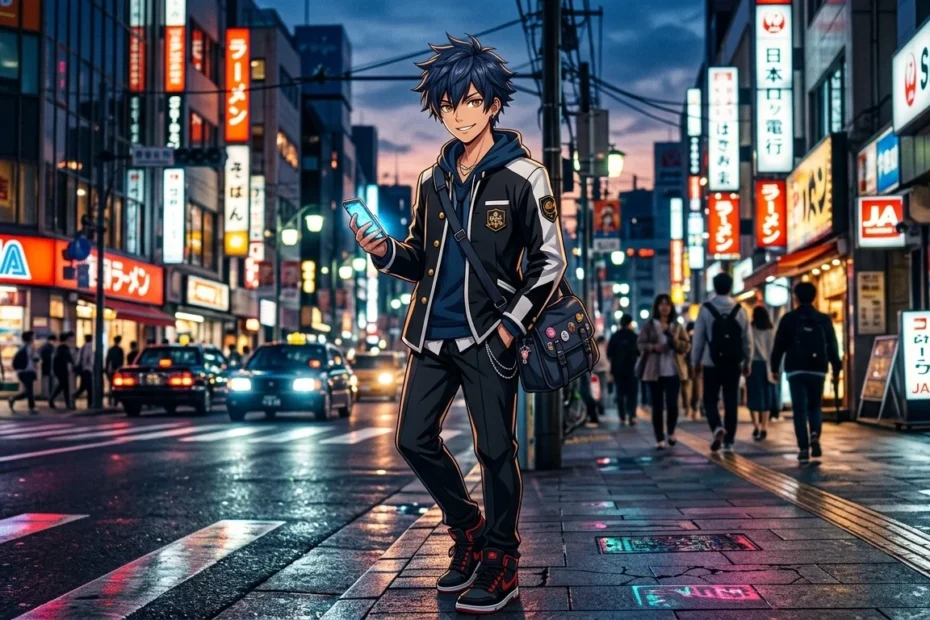
| Casual Streetwear | Modern, everyday outfits that reflect current fashion trends. | Layered looks with graphic tees and hoodies |
Understanding these styles helps in creating a believable and appealing anime boy.
Iconic Anime Boys Who Shaped the Industry
Certain anime boys have become legends, influencing the industry and generations of fans.
Astro Boy (Tetsuwan Atom)
The original anime boy and the face of a genre. Astro Boy was created by Osamu Tezuka in 1951 and became the first official anime. He is a caring helper-friend of humans who acts as a mediator and problem solver.
Goku (Dragon Ball)
Goku arrived in 1984 and became the blueprint for modern shonen heroes. His journey from a simple boy with a tail to the strongest warrior in the universe inspired countless anime boy protagonists that followed.
Monkey D. Luffy (One Piece)
Luffy is the quintessential shonen protagonist. He is an underdog who barely understands his own powers but has a long way to go before becoming Pirate King. His infectious optimism and unwavering loyalty have made him one of the most beloved anime boys of all time.
Naruto Uzumaki (Naruto)
Naruto is essentially the quintessential shonen series, and the DNA of other works can be traced directly back to it. Naruto’s journey from outcast to Hokage embodies the underdog story that defines so many great anime boy characters.
Spike Spiegel (Cowboy Bebop)
Spike Spiegel is the epitome of cool. A bounty hunter aboard the Bebop, his laid-back attitude, sharp fighting skills, and tragic backstory have made him an enduring icon.
Levi Ackerman (Attack on Titan)
Levi is one of the most popular male anime characters of all time. His kuudere personality, incredible combat skills, and unwavering dedication to humanity make him a fan favorite.
Top 10 Most Popular Male Anime Characters
According to MyAnimeList rankings:
- Lelouch Lamperouge (Code Geass)
- Monkey D. Luffy (One Piece)
- Levi Ackerman (Attack on Titan)
- L Lawliet (Death Note)
- Roronoa Zoro (One Piece)
- Light Yagami (Death Note)
- Eren Jaeger (Attack on Titan)
- Kirito (Sword Art Online)
- Saitama (One Punch Man)
- Izuku Midoriya (My Hero Academia)
The Cultural Impact of the Anime Boy
Anime boys have left the screen and become powerful forces in fashion, media, and global culture.
Influence on Fashion
Bishonen, or “beautiful boys,” have long been icons in Japanese visual culture. In reaction to more general societal shifts, their fashion tastes have changed dramatically. From elegant kimono-inspired looks to modern streetwear, the anime boy aesthetic continues to inspire fashion trends worldwide.
Redefining Masculinity
Anime boys challenge traditional notions of masculinity. Characters like those in Ouran High School Host Club can be categorized into types: Wild, Sporty, Princely, Nerdy, and Cute. This diversity shows that an anime boy can be strong, sensitive, funny, or mysterious. The androgynous or neutral traits of beautiful boy characters in anime existed in traditional Japanese culture before the commercialization of the character industry.
The Rise of VTubers
The concept of the anime boy has even evolved into a new form of entertainment: VTubers. These are virtual YouTubers who use anime-style avatars to stream content, interact with fans, and build communities.
Global Popularity
Nowadays, anime has reached a level of widespread acceptance and enthusiasm in the general public. public consciousness. From its inspiring heroes to its lively fan culture, anime has truly become a new cultural vocabulary for generations worldwide.
Frequently Asked Questions
Q: Who was the first anime boy?
A: Astro Boy, created by Osamu Tezuka in 1951, is considered the first official anime boy. He appeared in the manga series Tetsuwan Atom and became the face of Japanese animation worldwide.
Q: How do you draw anime eyes for a boy?
A: To draw anime eyes for a boy, start with a thick, slightly curved upper eyelid. Make the eye narrower and thinner than female eyes. Draw both the outer corner and the lower eyelid. Add a partially covered iris, a glare, and a pupil behind the glare. Shade the iris to finish.
Q: What are the different “dere” personality types for anime boys?
A: Common “dere” types include Tsundere (cold to warm), Yandere (sweet to obsessive), Kuudere (calm and unemotional), Dandere (shy and withdrawn), and Deredere (cheerful and affectionate).
Q: Why are anime boy eyes so expressive?
A: Anime eyes are designed to be expressive. The large surface area allows artists to convey a wide range of emotions with great detail. For male characters, the eyes are typically narrower and more angular, which can convey strength, determination, or mystery.
Q: What are the most popular anime boy hairstyles?
A: Common anime boy hairstyles include short and spiky for energetic characters, medium-layered cuts for a relaxed look, long-flowing hair for mysterious characters, and swept bangs for versatility.
Q: How has the anime boy changed over time?
A: The anime boy has evolved from the robotic Astro Boy of the 1950s to complex, psychologically rich characters. Modern anime boys often challenge traditional gender roles and explore themes of vulnerability, mental health, and identity.
Conclusion
The anime boy is much more than a simple character type. He is a cultural phenomenon that has evolved over decades, reflecting societal changes and inspiring millions worldwide. From the early days of Astro Boy to the modern complexity of characters like Eren Yeager and Lelouch Lamperouge, the anime boy continues to captivate. His design, from the expressive anime eyes to the detailed fashion, is a form of art that resonates across borders. Whether you are a fan, an artist, or a creator, the world of the anime boy offers endless inspiration. Start your own journey today and discover the anime boy that speaks to you. Subscribe to our newsletter for more insights into the world of anime, character design tips, and the latest trends in pop culture.