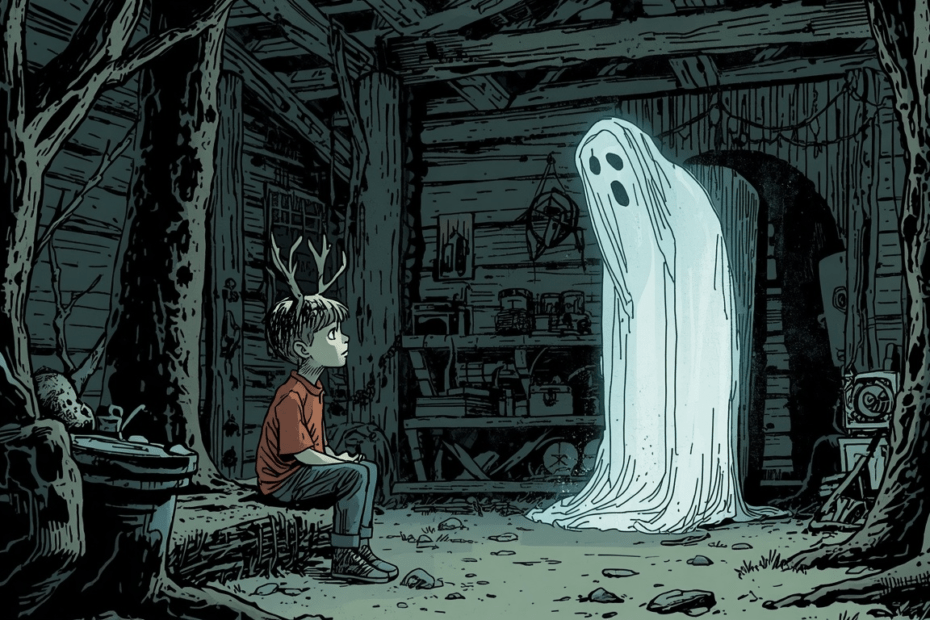
You never forget the first time you see Gus. I am a skinny kid with antlers talking to the ghost of my father in my cabin because ghosts are not real, because I do not comprehend the concept of death yet. That image, sketched by Jeff Lemire in uncertain, sincere strokes establishes the whole tone of the sweet tooth comic. No glitz, no sexy post-apocalyptic armor.
Simply a boy of purity waltzing into the world that desires for him to shatter. This series ran for 40 issues over a five-year period from 2009-2013 under DC’s Vertigo imprint, with Lemire writing and drawing every single panel himself. That personal aspect is precisely what makes it hit different from your average comic.
What the Sweet Tooth Comic Actually Is
Forget genre labels for a second. Yes, it’s post-apocalyptic. Yes, a plague called the Affliction wiped out most people. And yes, the children born after are human-animal hybrids, hunted by militias and experimented on by desperate scientists. But the sweet tooth comic book is, at its core, a road trip story between a child who refuses to become hard and a man who already is.
Gus, nicknamed Sweet Tooth for his love of chocolate, leaves his secluded cabin after his father dies. He meets Tommy Jepperd, a gruff ex-hunter with a dark past, and together they cross a ruined America looking for a safe haven called the Preserve. The plot is straightforward. The execution is anything but.
Why It Grabs You and Doesn’t Let Go
Lemire grew up reading Jack Kirby’s Kamandi and loved stories about strange boys in stranger lands. He poured that affection into Gus but grounded everything in real, painful emotion. He’s said in interviews that he named Gus after his own newborn son, which instantly explains why every panel of the boy feels so protective and fragile at the same time. That’s rare. The book doesn’t manipulate you with cheap shocks; it builds tension through quiet moments and then breaks your heart with a single line of dialogue.
The World Feels Real Because It’s Small
Most post-apocalyptic stories go big—massive cities, armies, sprawling lore. The sweet tooth comic stays small. Nebraska woods, dusty backroads, abandoned farmhouses. Nature is slowly claiming everything back, and Lemire’s watercolor-like coloring (handled by José Villarrubia) makes the world look both beautiful and sad. You can almost smell the pine and hear the wind through broken windows. That intimacy makes the violence, when it comes, hit harder. A single gunshot matters more here than a thousand in a summer blockbuster.
Gus: Not Your Typical Hero
Gus is nine when his father dies. He’s never met another kid. Candy is a revelation. He believes, genuinely, that people are good, even as evidence piles up against that notion. What makes him remarkable isn’t his antlers—it’s his stubborn gentleness. In issue #5, he practically forces Jepperd to be better just by existing. There’s a scene where Jepperd kills men to protect Gus, and Gus looks at him not with horror but with a sad kind of understanding. Those quiet moments, not the action beats, are the heart of the series.
Jepperd: The Man Who Chose to Stop Running
Jepperd used to hunt hybrids for the Last Men, a brutal gang that treats hybrid children like sport. He’s built like a refrigerator and carries that guilt like a physical weight. When he meets Gus, something shifts. Not overnight—Lemire is too good a writer for that. Jepperd’s redemption is ugly and incomplete. He still kills, still threatens, still keeps people at arm’s length. But for Gus, he walks into hell without hesitation. Their relationship mirrors a father and son but never becomes sappy. Jepperd would never say “I love you.” He shows it by bleeding.
The Sweet Tooth Comic Characters Who Haunt You
Outside the main duo, a few faces stick. Dr. Singh is a scientist who experiments on hybrids, convinced the Affliction’s cure lies in their bodies. The sweet tooth comic characters feel complex because Lemire writes them with motivations that make sense in their twisted world. Singh isn’t a cackling villain; he’s a broken man who lost his family and thinks monstrous acts will restore order.
Abbot the militia leader, weaponizes religion to justify genocide. Then there’s Bobby, a sweet hybrid whose friendship with Gus ends in a way that still upsets me years later. These characters stay with you precisely because they’re not just plot devices.
The Preserve Is a Lie, and That’s Important
Half the book is spent chasing the Preserve, a rumored safe place for hybrids. When they finally get close, the truth is dirty and disappointing. That narrative choice feels intentional. Lemire seems to be saying that chasing mythical safe havens keeps you from building real ones. The final location that matters isn’t the Preserve but a remote facility in Alaska, where all the ugly secrets about the hybrids’ origins finally surface. I won’t spoil the science because stumbling into it as a reader feels like being punched.
The Sweet Tooth Comic Ending Is Earned, Not Given
If you want a happy, tidy finale, this isn’t your story. Issue #39 is brutal. Jepperd dies saving Gus from Abbot in a moment that’s both heroic and devastating. Abbot dies too, but the victory tastes like ash. We see an older Gus, a father figure now, watching hybrid children play. The remaining humans have stopped fighting.
They live alongside the hybrids in quiet, weary peace. The sweet tooth comic ending hits because it’s honest—the world won’t magically heal, but people can choose differently. That final page, with kids laughing under trees, feels like a reward you and the characters suffered to deserve.
Sweet Tooth Comic vs Show: They’re Telling Different Stories
I enjoy the Netflix adaptation. It’s warm, visually lush, and has a lovely storybook tone. But the sweet tooth comic vs show differences are vast. Showrunner Jim Mickle purposefully created what he called a “storybook dystopia” because he felt a direct adaptation in the late 2010s would feel grim just for the sake of it. The comic is grim, but never for its own sake.
Jepperd dies in the comic; he survives the whole series on screen. Dr. Singh’s arc is completely reworked in the show to be more redemptive. Even the violence level shifts—comic Gus hits another boy with a brick and admits he doesn’t feel that bad, a moment the show would never include. Neither version is better; they’re just aiming at different hearts.
Quick Comparison Table
- Aspect Sweet Tooth Comic Netflix Series
- Jepperd’s fate Dies heroically in penultimate issue Survives all three seasons
- Gus’s future Becomes protective father figure Becomes an elder storyteller
- Tone Bleak and intimate, heavy emotional weight Hopeful and storybook-like
- Dr. Singh Morally gray, unresolved Sacrifices himself to save Gus
- Violence Unflinching and personal Largely implied off-screen
The Art Looks Simple, But It’s Deceptively Powerful
Jeff Lemire’s art style splits readers. Some see scratchy lines and think it’s amateur. I see emotion poured directly onto the page. He draws Gus’s eyes huge and scared. Jepperd is all hulking silhouette and tired lines. When the book needs silence, Lemire gives you a full-page panel of snow falling on an empty road.
The coloring by José Villarrubia adds a desaturated, almost watercolor warmth that stops the bleakness from becoming oppressive. The lettering feels intimate, too—not bombastic superhero caption boxes, just quiet narrative that reads like a diary.
How Lemire Wrote Such a Personal Story
He plotted the ending before issue one came out. That’s discipline. He also drew the whole thing in his basement studio while being a new father, which explains why the parental fear in these pages feels so real. The sweet tooth comic doesn’t exist to sell toys or launch a universe. It exists because a creator had a very specific story he needed to tell. That purity comes through in every issue.
Reading Order and Where to Begin
Don’t jump into random issues. This is one long novel. Then just follow the collected editions straight through to Book Three. Digital readers can find the whole run on DC Universe Infinite. If you like physical books, the deluxe hardcovers are beautiful objects. But really, any format works as long as you read in order.
What Makes This Book Comfort Food for a Weary Soul
Oddly, the sweet tooth comic is one of my go-to rereads when the world feels heavy. There’s something cathartic about watching innocence struggle and not break. Gus believes in people even when he probably shouldn’t. Jepperd finds meaning in protecting one small life. The story argues that kindness is a choice, not a weakness. In a media landscape full of cynical, grimdark stories, that message lands like a warm blanket.
Frequently Asked Questions
What is the sweet tooth comic about?
It follows Gus, a deer-boy hybrid, and his protector Jepperd across a plague-ravaged America. They search for a safe place while hunters and scientists pursue them, and at its core it’s a story about found family.
How does the sweet tooth comic ending differ from the show?
Jepperd dies in the comic, sacrificing himself for Gus. The show keeps him alive. The comic’s ending is quieter and more bittersweet, with Gus growing old as hybrids and humans learn to coexist.
Who are the main sweet tooth comic characters?
Gus the deer-boy, Tommy Jepperd the former hunter, Dr. Singh the conflicted scientist, and Abbot the genocidal militia leader drive most of the story. Each has deep flaws and believable motivations.
What is the biggest sweet tooth comic vs show difference?
Tone. The comic is intimate, brutal, and emotionally heavy. The show adopts a warmer, storybook aesthetic. Jepperd’s fate and Dr. Singh’s arc also change significantly in adaptation.
Where should I start reading the sweet tooth comic book?
Grab Sweet Tooth Book One in paperback or read the series digitally on DC Universe Infinite. Read issues in order—the story is a continuous narrative.
Why does the sweet tooth comic stick with readers?
Because it’s deeply personal. Jeff Lemire wrote and drew it alone, pouring his own fears about fatherhood into Gus. That authenticity, combined with a refusal to offer easy answers, makes the story unforgettable.
You Should Read This If You’ve Ever Felt Like the World Is Too Much
Not because it offers escape, but because it offers perspective. The sweet tooth comic tells you that goodness isn’t naive—it’s the hardest, bravest thing you can choose. Gus walks through horror and stays soft. Jepperd, who inflicted pain, dies giving life. I finished the last issue feeling emptied out but somehow lighter. If you’ve only seen the show, please don’t assume you know the story. The comic will surprise you.
Pick up Sweet Tooth Book One from your local shop or library. Read it with a cup of coffee on a quiet afternoon. Then, if it hits you the way I think it will, tell someone about it. Sharing stories like this keeps them alive, and honestly, we need Gus’s stubborn hope now as much as ever. Drop a comment below with your favorite moment from the series or a character who got under your skin. I’d genuinely love to hear it.